Showing posts with label Medieval History. Show all posts

Friday, February 11, 2022

Bahamani Kingdom

Bahamani Kingdom

The Deccan region was a part of the provincial administration of the Delhi Sultanate. In order to establish a stable administration in the Deccan, Mohammad bin Tughlaq appointed amiran-i-sada/ Sada Amir, who were the administrative heads of hundred villages. From 1337 the conflict between the officers in Deccan and Delhi sultanate accelerated. This led to the establishment of an independent state in the Deccan in 1347 with the capital at Gulbarga in Karnataka.

THE BAHAMNI SULTANATE

Political History:

  • Alauddin Hassan Gangu Bahaman Shah was the founder of Bahamani sultanate in the year 1347AD.
  • Rivalry with Vijayanagar kingdom over the fertile region of Raichur doab started from his period , and continued till the last of Bahaman rule.
  • He had frequent conflicts with Warangal state, reddy kingdoms of Rajhmundry and Kondavidu. Bahman Shah emerged victorious in all these expeditions and assumed the title Second Alexander on his coins.
  • Mohammed I succeeded Bahman Shah.
  • His attack on Warangal in 1363 brought him a large indemnity, including the important fortress of Golkonda and the treasured turquoise throne, which thereafter became the throne of the Bahmani kings.
  • The next hundred years saw a number of Sultans one after another, by succession or usurpation. All of them fought with their southern neighbour, but without gaining much territory.
  • In 1425 Warangal was subdued and their progress further eastwards was challenged by the Orissan rulers.
  • In the year 1429 Ahmed Shah al wali shifted capital city from Gulbarga to Bidar.

The rule of Mohammad III (1463–1482) is worthy of mention because of his lieutenant Mohammed Gawan, a great statesman.


Mohammad Gawan:

  • The Bahmani kingdom reached its peak under the guidance of Prime minister Mahmmad Gawan. He was a Persian merchant.
  • He was well-versed in Islamic theology, Persian, and Mathematics. He was also a poet and a prose-writer. 
  • He was also a military genius. He waged successful wars against Vijayanagar, Orissa and the sea pirates on the Arabian sea.
  • He built a Madarsa at Bidar in Persian architectural style.
  • This madarasa was great learning centre  with collection of 3000 manuscripts from all over the world.
  • Gawan’s progress was not tolerated by native Muslim leaders.They made false allegations. They made Sultan to punish him with death sentence.
  • After execution of Gawan Bahamani Sultanate started to decline.
  •  After  few years Sultanate gradually broke up into five independent kingdoms: Bijapur, Ahmadnagar, Berar , Golkonda and Bidar.

– Gawans madarasa, Bidar, Karnataka


Administration:

  • The kingdom was divided into four administrative units called ‘taraf’ or provinces. These provinces were Daultabad, Bidar, Berar and Gulbarga
  • Every province was under a tarafdar who was also called a subedar
  • Some land was converted into Khalisa land from the jurisdiction of the tarafdar.( Khalisa land was that piece of land which was used to run expenses of the king and the royal household).
  • Nobles used to get their salary either in cash or in form of grant of land or ‘jagir’.

Military:

  • Bahamani ruler depended for military support on his amirs
  • There were two groups in the ranks of amirs: One was the Deccanis who were immigrant Muslims and had been staying for a long time in the Deccan region. The other group was Afaquis or Pardesis who had recently come from Central Asia, Iran and Iraq.
  • Bahamanis were  familiar with the use of gunpowder in warfare.

Literature:

  • Persian ,Arabic and Urdu literature flourished in this period.
  • Mohammad Gawan wrote poems in Persian language. Riyaz-ul-Insha, Manazir-ul-insha are his works.
  • A new dialect called “Dakhini urdu “ became popular during this time.
  • The famous sufi saint of Gulbarga, Khwaja Bande Nawaz Gesu Daraj wrote in this language.

Architecture:

  • They followed Indo-Islamic style of architecture with some improvisation. Local materials were used to construct the buildings.
  • The architecture was highly influenced by Persian architecture.
  • Some features of this style are
    • Tall minarets
    • Strong arches
    • Huge domes
    • Spacious Hazaras
    • Crescent moon at the top of the building

Examples.

  • Monuments at Gulbarga: Shah bazaar mosque, Hafta Gumbaz, Jama maszid etc
  • At Bidar : Mohammad Gawan’s madarasa, solah khamba mosque, Rangeen mahal, Janata mahal etc
  • At Bijapur : Gol gumbaz(built by Mohammad Adil shah in 1656AD), Ibrahim roza, Bara Kaman, Anand mahal, Chand Bawdi etc.


-GOL GUMBAZ, BIJAPUR


-IBRAHIM ROZA, BIJAPUR


-BAHAMANI TOMBS AT BIDAR

The Age of Vijaya Nagara (1336AD-1647AD)

Join Our Telegram Channel 
Read about digital University 

Vijayanagara

The Age of Vijaya Nagara (1336-1647) AD :

In 1336, Vijayanagar kingdom was established by Harihara and Bukka, who were two brothers and served in the army of Muhammad-bin-Tughlaq. They broke away from the Delhi Sultanate and established an independent state in Karnataka and established the capital city Vijayanagar on the banks of river Tungabhadra in 1336.

Harihara and Bukka were helped and inspired by contemporary scholar and a saint Vidyaranya for the establishment of their kingdom.


Sources:

Literary Sources:

  • Rayavachakam by vishvanatha sthanapati
  • “The forgotten history of vijayanagar empire” by Robert seawell
  • The Kannada and Telugu literature, like Manucharitram, Saluvabhyudayam, etc., patronized in the Vijayanagar court, give genealogical, political and social information.

Foreign Accounts:

  • Nicholo de conti visited Vijayanagar durinh times of Devaraya 1 and gave details about his personality.
  • Abdul Razzaq from Persia visited during Devaraya 2. He described the beauty of capital city Hampi.
  • Domingo Paes and Barbosa visted during Krishnadevraya time.
  • Nuniz visted during the times of achyuthdevaraya

Inscriptions:

  • Bitragunta inscription is the major source for construction of family history of sangama dynasty.
  • Srirangam copper plates of Devaraya II provide the genealogy and achievements of Vijayanagar rulers.
  • Various copper plate inscriptions of krishnadevraya time.
  • The Hampi ruins and other monuments of Vijayanagar provide information on the cultural contributions of the Vijayanagar rulers.

Political History :

  • Vijayanagar was ruled by four different dynasties
    • Sangama dynasty(1336-1486)
    • Saluva dynasty(1486-1506)
      Tuluva dynasty(1506-1565)
    • Aravidu dynasty(1570-1647)

Sangam Dynasty:

  • Harihara raya was first ruler. Vijayanagar and Bahamani conflict started during his times.
  • Bukaraya ascended throne after harihara.
  • Bukka’s son kamparaya annexed Madurai. This episode was written by Gangadevi(wife of kamparaya) as Madhuravijayam in Sanskrit.
  • He captured revatidweepa(Goa).
  • He created Pansupari bazaar in Hampi
  • Bukaraya was succeeded by harihara 2 and later Devaraya came to power
  • Devaraya 1 was the first important king. He was the first to construct dam across river Tungabhadra
  • Devarya 1 was defeated by Bahaman sultan Feroz shah 1.
  • The greatest ruler of the Sangama dynasty was Deva Raya II.
  • He inducted muslim archers into army.
  • He was first vijayanagara ruler to collect tributes from cylon.
  • After his death, Sangama dynasty became weak.
  • The last king virupaksharaya was dethroned by his commander Saluva Narsimharaya 1, and he stared Saluva dynastic rule.

Saluva Dynasty:

  • Narasimha raya 2 was the greatest in saluva dynasty.
  • Annamcharaya lived during this time period.
  • After the death of Narasimha 2, Narasa nayaka installed his son veeranarsimha on throne.
  • Veeranarasimha started rule of Tuluva dynasty.
Conflict Between Vijayanagar & Bahamanis
There were constant conflicts between the Vijayanagar and the Bahamani kingdoms over the control of Raichur doab which was the land between rivers Krishna and Tungabhadra. This area was fertile and rich in mineral resources. The famous diamond mines of Golconda were located in the eastern part of the doab region. The geography of both the kingdoms was such that expansion was possible only across Tungabhadra in the Deccan. It appears that the battles between the two were not conclusive and the status quo was maintained

Tuluva dynasty:

  • After the death of Veeranarasimha , prime minister Thimmarasu installed Krishnadevaraya on throne.
  • Krishnadevaraya (1509-1529)was the greatest in this dynasty.
  • He was a great commander and an efficient administrator. He fought a series of war with the independent kingdoms that came on the ruins of the Bahamani kingdom, maintained law and order and dealt with the Portuguese influence in the Deccan.
  • He completely shattered the Adil Shahi forces of Bijapur first and attacked Gulbarga and set free three Bahamani princes who were imprisoned there. He helped them in recovering the throne of Gulbarga and Krishna Deva himself took the title of Yavanarajya sthapanacharya.
  • He started his eastern campaign in 1513AD.
  • Udayagiri was the first fort to be captured by Krishnadevaraya.
  • He defeated Prataparudra Gajapati of Orissa.
  • He married Gajapati princess Tukkadevi or Annapurnadevi.
  • Raichur campaign in 1520 was his last campaign. He defeated Ismail Adil shah.
  • Portugese governor Alfanso de Alburque concluded treaty with Krishnadevaraya.
  • In 1510 Portugese captured Goa from Bijapur Sultan.
  • He was a great patron of literature and art and he was known as Andhra Bhoja
  • Eight eminent scholars known as Ashtadiggajas were at his royal court.
  • Due the death of his son ,Krishnadevaraya received nervous breakdown and passed away in 1529.
  • After his death, Achyutadeva and Sadashivraya succeeded the throne.
  • During the reign of Rama Raya, the Bahaman confederacy (combined forces of Bijapur, Ahmadnagar, Golkonda and Bidar) defeated him(Ramaraya)  at the Battle of Talaikote in 1565.
  • Rama Raya was imprisoned and executed. The city of Vijayanagar was destroyed. This battle was generally considered to mark the end of the Vijayanagar Empire.
  • However, the Vijayanagar kingdom existed under the Aravidu dynasty for about another century.

Aravidu Dynasty:

  • Thirumala, Sri Ranga and Venkata II were the important rulers of this dynasty.
  • Venkata II was contemporary to Akbar. He shifted capital city to
  • The last ruler of Vijayanagar kingdom was Sri Ranga III.
  • Sri Ranga was defeated by Mir Jumla of Golconda in battle of Vandavasi in 1647.
  • Vijyanagar empire came to an end with this.

Administration :

  • They followed traditional monarchy.
  • The king was the ultimate authority in the kingdom. He was also the supreme commander of the army.
  • The king was assisted by a council of ministers in his day to day administration.
  • One of the important characteristics of the Vijayanagar administration was the amaranayaka This is similar to the iqta system of Delhi Sultanate.
  • In this system, the commander of the Vijayanagar army was called the nayaka. Each nayaka was given an area for administration. The nayaka was responsible for expanding agricultural activities in his area
  • He collected taxes in his area and with this income maintained his army, horses, elephants and weapons of warfare that he had to supply to the raya or the Vijayanagar ruler
  • The amara-nayakas sent tribute to the king annually and personally appeared in the royal court with gifts to express their loyalty.

Revenue:

  • Land revenue was the major source of income to the state.
  • Genrally it was it was at the rate of one sixth of the total produce.

Society:

  • People were found of luxurious life.
  • Silk and cotton clothes were mainly used for dress. Perfumes, flowers and ornaments were used by the people. Paes mentions of the beautiful houses of the rich and the large number of their household servants.
  • Prostitution was institutionalized.
  • Devdasi or temple dancer system became more popular.
  • Practice of sati further strengthened.
  • Existence of four caste- Brahmins, Kshatriyas, Vaisyas and Sudras.

Religion:

  • The Sangama rulers were chiefly Saivaites and Virupaksha was their family deity. But other dynasties were Vaishnavites.
  • But all kings were tolerant towards other religions. Borbosa referred to the religious
    freedom enjoyed by everyone.
  • Muslims were employed in the administration and they were freely allowed to build mosques and worship.
  • Shunya sampadane– a collection of vachanas produced in this age.(vachanas literally meaning sayings in kannada, these are poetic verses composed in kannada language, popularized by veershaiva movement led by Basavanna).

Literature:

  • Sanskrit, Kannada, Telugu language witnessed voluminous literature in Vijayanagar period.
  • Few Sanskrit works are.
    • Gangadevi wrote- Madhuravijayam
    • Krishnadevarya wrote – usha parinayan, jambavanti kalyanam, madalasa charita.
    • Guru vidyaranya wrote—Raja kalanirnaya
  • Literary works in Kannada.
    • Chamarasa wrote – prabhulingaleele
    • Kanakadas wrote- Ramadhanacharite, nala charite, mohantarangini
    • Kumaravyasa wrote – Karnataka katha manjari
    • Purandardas — keertanas
  • Literary works in Telugu
    • Krishnadevaraya wrote – Amuktamalyada
    • Allasani pedanna wrote – Manucharita
    • Nandi timanna wrote – Parijathaparahana etc
  • Ashtadiggajas– eight great poets of Telugu literature flourished in the court of Krishnadevaraya.

Architecture:

  • They used the Dravidian style of architecture later added some unique features to it and it came to be called as Vijayanagara style.
  • Preferred for its durability, local hard granite was the building material of choice, as it had been for the Badami Chalukyas.
  • Vijayanagar temples are surrounded by strong enclosures and characterized by ornate pillared kalyanamandapa (marriage halls); tall rayagopurams (carved monumental towers at the entrance of the temple) built of wood, brick, and stucco in the Chola style; and adorned with life-sized figures of gods and goddesses.
  • This dravida style became popular during the reign of Krishnadeva Raya and is seen in South Indian temples constructed over the next two centuries.
  • The courtly architecture of Vijayanagar is generally made of mortar mixed with stone rubble and often shows secular styles with Islamic-influenced arches, domes, and vaults.

Some famous temples exemplifying the Vijayanagar style include the Virupaksha Temple at Hampi and the Hazara Rama temple of Deva Raya I etc.


Virupaksha Temple


Hazara Rama Temple


Lotus Mahal

Wednesday, February 9, 2022

Mughal Empire

Mughal Empire 

THE MUGHAL EMPIRE

Babur was the founder of the Mughal empire which was established in 1526 after Babur defeated Ibrahim Lodi in the first battle of Panipat.

Thus a new epoch and a new empire in India began, lasting for nearly three centuries beginning from 1526 to 1857. Six major rulers of this dynasty, Babur, Humayun, Akbar, Jahangir, Shah Jahan and Aurangzeb, known as the “Great Mughals”, left their mark on Indian
history. The empire declined after the death of Aurangzeb in 1707.

Zaheeruddin Mohammad Babur (1526-1530)


Mughal empire

  • Babur ascended the throne at Farghana (Uzbekistan), in 1494 at the age of twelve after the death of his father.
  • The situation in Central Asia was not stable and Babar had to face a lot of resistance from the nobility itself.
  • Although he was able to capture Samarqand but very soon he had to retreat because of desertion of some of his nobles. He also lost Farghana to the Uzbegs.
  • After years of wandering he seized Kabul in 1504.
  • During this whole period he had plans of moving towards Hindustan. And finally from 1517 onwards he made decisive moves towards India.
  • Meanwhile in India there was conflict between some Afghan chiefs with Ibrahim Lodi. Prominent among them was Daulat Khan Lodi, the Governor of a large part of Punjab.
  • The Rajput king of Mewar Rana Sanga was also asserting his authority against Ibrahim Lodi and was trying to increase his area of influence in north India.
  • Both of them sent word to Babur to invade India. Invitations from Rana Sanga and Daulat Khan Lodi might have encouraged Babur’s ambitions.
  • Between 1519 and 1524 he invaded Bhera, Sialkot and Lahore.
  • Finally, in 1526 Ibrahim Lodi and Babur’s forces met at Panipat .
  • Babur had an active army of only 12000 soldiers while Ibrahim’s army had an estimated strength of 100,000 soldiers. When face to face in the battle field Babur’s tactics were unique. He effectively applied the Rumi (Ottoman) method of warfare.
  • Cannons were an important addition in sixteenth-century warfare. Babur used them effectively in the first battle of Panipat.
  • Mughal empire– use of cannons in first battle of panipat

    • Babur had conquered Delhi and Agra, but he still had to suppress the Rajputs and the Afghans.
    • Babur decided to take on Rana Sanga of Chittor, who as ruler of Mewar, had a strong influence over Rajasthan and Malwa.
    • The forces of Babur and Rana Sanga met at Khanwa, a place near Fatehpur Sikri. Rana Sanga was defeated in 1527 and once again the superior military tactics of Babur succeeded. With the defeat of Rana the biggest challenge in north India was shattered. (Battle of khanwa 1527).
    • Though the Mewar Rajputs received great shock at Khanwa, Medini Rai at Malwa was still threatening to challenge the authority of Babur.
    • In the neat year Babur defeated Medini Rai in Chanderi. (Battle of Chanderi 1528).
    • In the subsequent year Babur encountered Afghans(Ibrahim Lodi’s brother Mohammad Lodi) , and defeated them in Battle of Ghagra 1529.
    • Babur died in the year 1530AD.
    • He was a scholar of Persian and Arabic languages.
    • He wrote his autobiography, Tuzuk-i-Baburi in Turki language. Later it was translated into Persian and other languages.
Nasiruddin Mohammad Humayun (1530-1540  1555-1556)

Mughal empire

  • After the death of Babur in 1530, his son Humayun succeeded him.
  • Humayun means “fortune” but he remained the most unfortunate ruler of the Mughal Empire.
  • Humayun, a cultured and learned person, was not a soldier like his father.
  • He was faced with the problems of a weak financial system and the predatory Afghans.
  • The growth of Afghan power in the regions around Bihar and Uttar Pradesh under the leadership of Sher Khan (later Sher Shah) made Humayun to initiate action. Defeating the Afghans at Daurah in 1532 Humayun besieged the powerful fort of Chunar.
  • However in 1539 Sher Shah Suri defeated Humayun in Battle of Chausa. Somehow Humayaun managed to escape from battle ground.
  • In the next year SherShah Suri confronted Humayun in Kannauj and defeated him completely. (Battle of Kannauj 1540)
  • Sher Shah started his independent rule.
Sher Shah Suri (1540-1555)

Mughal empire

  • Farid, who later came to be called Sher Khan and subsequently Sher Shah, was son of a Jagirdar under the kingdom of Jaunpur. His father Hasan Khan Sur held the jagir of Sasaram in Bihar during the rule of Lodis.
  • After defeating Humayun he became sovereign ruler in the year 1540 and assumed the title of Sher Shah.
  • After a gap of 14 years Sher Shah succeeded in establishing the Afghan rule again in India in 1540(Lodis were the first Afghans to rule)
  • Sher Shah and his successors ruled for 15 years. This period is known as the period of second Afghan Empire.
  • He defeated and conquered Malwa in 1542 which was followed by Chanderi. In Rajasthan he led campaigns against Marwar, Ranthambhore, Nagor, Ajmer, Merta Jodhpur and Bikaner. He defeated rebellious Afghans in Bengal. By 1545 he had established himself as the supreme ruler from Sindh and Punjab to whole of Rajputana in the West and Bengal in the East.
  • Now he turned towards BundelKhand. Here while besieging the fort of Kalinjar he died in 1545 in an accidental blast of gun powder.
  • After Sher Shah’s death in 1545 his successors ruled till 1555 when Humayun reconquered India.

Sher Shah’s Reforms:

  • He made his government highly centralised.
  • The king was assisted by important ministers:
    Diwan –i- Wizarat – also called as Wazir – in charge
    of Revenue and Finance.
    2. Diwan-i-Ariz – in charge of Army.
    3. Diwan-i-Rasalat- Foreign Minister.
    4. Diwan-i-Insha- Minister for Communications.
  • Sher Shah’s empire was divided into forty seven sarkars. Chief Shiqdar (law and order) and Chief Munsif (judge) were the two officers in charge of the administration in each sarkar.
  • Each sarkar was divided into several parganas. Shiqdar (military officer), Amin (land revenue), Fotedar (treasurer) Karkuns (accountants) were in charge of the administration of each pargana.
  • Sher Shah had also improved the communications by laying four important highway They were: 1. Sonargaon to Sind 2. Agra to Burhampur 3. Jodhpur to Chittor and 4. Lahore to Multan.
  • He extended the Grand Trunk Roadfrom Chittagong in the frontiers of the province of Bengal in northeast India to Kabul in Afghanistan in the far northwest of the country.
  • Malik Muhammad Jayasi wrote the famous Hindi work Padmavat during his reign.
  • He started building a new walled city in Delhi, which later came to be known as Purana Qila (Old Fort).
  • He built his own mausoleum in Sasaram.


Nasiruddin Mohammad Humayun (1555-1556)

When Humayun left India in 1540, he married Hamida Banu Begum on his way to Sind. When they stayed in Amorkot, a Hindu kingdom ruled by Rana Prasad, Akbar was born in 1542. Humayun then proceeded to Iran and sought help from its ruler. He later defeated his brothers, Kamran and Askari. In the meantime the Sur dynasty in India was declining rapidly. In 1555, Humayun defeated the Afghans and recovered the Mughal throne. After six months, he died in 1556 due to his fall from the staircase of his library.

His biography Humayunnama was written by Gulbadan Begum in Persian language.

He was buried in Delhi.


 Akbar(1556-1605)

Akbar was only thirteen years old at the time of Humayun’s death. When his father died, Akbar was at Kalanaur in Punjab and therefore his coronation took place in Kalanaur itself in 1556.
It was his tutor and Humayun’s favourite and confidant Bairam Khan, who served as the regent of the Mughal emperor from 1556 to 1560.
As a conqueror Akbar triumphed all over North India. The first four years of Akbar’s
rule saw the expansion of the Mughal empire from Kabul to Jaunpur, including
Gwalior and Ajmer, under his regent Bairam Khan.
One of the major achievements of his regency period was the defeat of Hemu and the Afghan forces in the second battle of Panipat in 1556, who were posing a serious threat to the Mughal Empire.
Akbar’s Military Conquests:

Malwa was conquered in 1562 from Baz Bahadur who was made a mansabdar in Akbar’s court.
The Gondwana region of central India was annexed after a fierce battle with Rani Durgavati and her son Vir Narayan in 1564.
Akbar conquered Gujarat from Muzaffar Shah in 1573.Akbar built new capital Fathepur sikri in memory of this victory.
In the Battle of Haldighati, Rana Pratap Singh was severely defeated by the Mughal army led by Man Singh in 1576. Following the defeat of Mewar, most of the leading Rajput rulers had accepted Akbar’s suzerainty.
Defeated Daud Khan, the Afghan ruler of Bihar and Bengal, both the provinces were annexed to the Mughal empire in 1576.
Akbar’s forces had occupied Khandesh region in 1591.
Chand Bibi defended Ahmednagar against the Mughal forces.

– A depiction of the traditional account of the battle of Haldighati by the painter Chokha

Rajput policy:

The Rajput policy of Akbar was notable. He married the Rajput princess, the daughter of Raja Bharamal. It was a turning point in the history of Mughals. Rajputs served the Mughals for four generations. Many of them rose to the positions of military generals. Raja Bhagawan Das and Raja Man Singh were given senior positions in the administration by Akbar. One by one, all Rajput statessubmitted to Akbar.

Religious policy:

He abolished the pilgrim tax and jiziya
In 1575, he ordered for the construction of Ibadat Khana (House of worship) at his new capital Fatepur Sikri.
Akbar invited learned scholars from all religions like Hinduism, Jainism, Christianity and Zoroastrianism.
In 1582, he promulgated a new religion called Din Ilahi or Divine Faith. It believes in one God. It contained good points of all religions.
He propagated a philosophy of Sulh-i-Kul (peace to all).
In 1582, he discontinued the debates in the Ibadat Khana as it led to bitterness among different religions
Badauni, a contemporary author, was bitter critic of Akbar’s religious experiment.
Sheikh Mubarak was religious guru of Akbar.
Akbar’s new religious policy was drafted by Abul Faizi.


Jahangir(1605-1627)


Akbar was succeeded by his son Salim with the title Nur-ud-din Jahangir.
He was Akbar’s son by a Rajput wife.
His ascension was challenged by his eldest son Prince Khusrau who staged a revolt with the blessings of Sikh Guru Arjun Dev.
Prince Khusrau was defeated, captured and blinded, while Guru Arjun Dev was executed.
In 1608 Ahmad Nagar in the Deccan had declared independence under Malik Ambar.
During the reign of Jahangir there was no addition to the Mughal territory in Deccan.
Jahangir’s reign witnessed the visit of two Englishmen – William Hawkins and
Sir Tomas Roe. While the former could not get the consent of the Emperor for
establishing an English factory in India, the latter, sent as ambassador by King
James I, succeeded in securing permission to establish a British factory at Surat.
In 1611, Jahangir married Mehrunnisa who was known as Nur Jahan (Light of World).
Nur Jahan dominated the royal household and set new fashions based on Persian traditions. She encouraged Persian art and culture in the court.
Nur jahan became the real power behind the throne.
The political intrigues that prevailed because of Nur-Jahan, led Prince Khurram(Shah Jahan) to rebel against his father.
Nur-Jahan, who ruled the empire for ten years, lost her power and influence
after Jahangir’s death.
Jahangir died near Lahore (on the way from Kashmir to Lahore). He was buried in Lahore.
Mughal empire
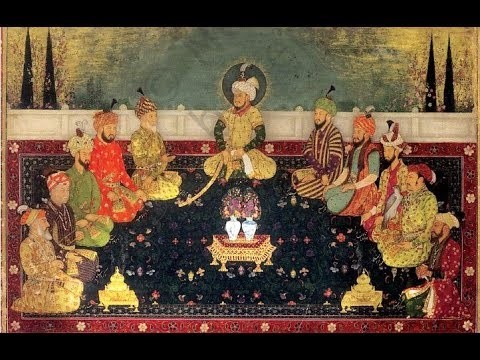
-Sir Thomas Roe in Jahangir’s court
-Tomb of Jahangir , Lahore


Shah Jahan(1627-1658)

After Jahangir’s death in 1627, Shah Jahan reached Agra with the support of the nobles and the army and ascended the throne.
Shah Jahan launched a prolonged campaign in the northwest frontier to recover Kandahar and other ancestral lands. But was unable to control Kandhar.
His Deccan policy was more successful. He defeated the forces of Ahmadnagar and annexed it. Both Bijapur and Golkonda signed a treaty with the emperor.
Shah jahan defeated Shivaji’s father shahji Bhonsle.
In 1631 Shah Jahan’s wife Mumtaz mahal passed away at Burhanpur. In memory of her Shah jahan started constructing Musoleum at Agra(Taj mahal).
He was contemporary to Louis XIV of France.
In his reign the famous Peacock Throne was made for the King.
Europeans like Bernier (French physician and traveller), Tavernier (French gem
merchant and traveller), Mandelslo (German adventurer and traveller), Peter Mundy (English Trader) and Manucci (Italian writer and traveller) visited India during the reign of Shah Jahan and left behind detailed accounts of India.
During the last days of Shah Jahan, there was a contest for the throne amongst
his four sons.
Dara Shukoh, the eldest, was the favourite of his father.
A war of succession broke out between the four sons of Shah Jahan in which Aurangzeb emerged victorious.
Aurangzeb imprisoned Shah Jahan and crowned himself as the Mughal emperor. Shah Jahan died broken hearted as a royal prisoner in January 1666 and was buried in the Taj Mahal.

Aurangazeb(1657-1707)

He assumed the title Alamgir, World Conqueror.
His military campaigns in his first ten years of reign were a great success. He suppressed the minor revolts. But he faced serious difficulties in the latter part of his reign
The Jats and Satnamis and also the Sikhs revolted against him. These revolts were induced by his harsh religious policy.
Aurangazeb was basicallu puritan (religious) in nature. He imposed jijiya on Hindus.
He was influenced by Nakshabandi sufi order.
Prince Akbar rebelled against his father Aurangazeb, in this connection ninth Guru of Sikhs Guru Tegbahadur was executed by Aurangazeb.
Deccan policy: Te Deccan policy of Aurangzeb was motivated by the policy of containing the growing influence of the Marathas, the rebellious attitude of the Shia kingdoms of Deccan like Golkonda and Bijapur and to curtail the rebellious activities of his son Akbar who had taken refuge in the Deccan. Aurangzeb came to the Deccan in 1682 and remained in the Deccan till his death in 1707.
Aurangazeb annexed Golconda and Bijapur.
In fact, the destruction of the Deccan kingdoms
was a political blunder on the part of Aurangazeb. The barrier between the Mughals and the Marathas was removed and there ensued a direct confrontation between them. Also, his Deccan campaigns exhausted the Mughal treasury. According to J.N. Sarkar, the Deccan ulcer ruined Aurangazeb.
The Marathas under Shivaji were a threat to Aurangzeb.
Aurangzeb sent two of his great generals Shaista Khan and Jai Singh
one after the other to capture Shivaji. Jai Singh captured Shivaji and took him to
Delhi but Shivaji managed to escape to the Deccan.
Shivaji, employing guerrilla tactics, defied the Mughal forces till his death at the age of 53 in 1680.
Aurangazeb was severely tested by the Marathas till his death in 1707 as the sons of Shivaji continued the rebellion.
The death of Aurangzeb in 1707 marked a watershed in Indian history as the Mughal empire virtually came to end even though the weak successors of Aurangzeb held the throne the next 150 years.

Administration in Mughal Empire

The Mughals retained many features of the administrative system of the Sultanate and Shershah.
Under Shershah the administrative units of Pargana (a group of villages), sarkar (a group of parganas) and groups of sarkars (some what like subas or province) were placed under specific offices
The Mughals formalized a new territorial unit called suba. The Mughal empire was divided into twelve provinces or subas by Akbar.
Institutions of Jagir and Mansab system were also introduced by the Mughals.

Mansabdari System

Under this system every officer was assigned a rank (mansab).The lowest rank was 10 and the highest was 5000 for the nobles. Princes of royal blood received even higher ranks. The ranks were divided into two – zat and sawar. Zat means personal and it fixed the personal status of a person. Sawar rank indicated the number of cavalrymen of a person who was required to maintain. Every sawar had to maintain at least two horses. The mansab rank was not hereditary. All appointments and promotions as well as dismissals
were directly made by the emperor.

Land Revenue System:

Akbar went for revenue experimentation in his administration .
The revenue policies of Alauddin Khilji and Sher Shah Sur formed the base for Mughal revenue system.
In the year 1581 revenue minister Raja Todarmal reorganized the whole land revenue system. This system is known as Zabti or bandobast
According to this system land was measured and classified based on the fertility of soil as,

Polaj- cultivated every year

Parauti – once in two years

Chachar- once in three or four years

Banjar-once in five or more years

Literature during Mughals

Persian, Sanskrit and regional languages developed during the Mughal rule.
Persian was the language of administration in Mughal Empire.
The greatest contribution in the field of literature during the Mughal rule was the development of Urdu as a common language of communication for people speaking different dialects.
Babur wrote his autobiography, Tuzuk-i-Baburi in Turki language.
This autobiography gives details of flora and afauna in India.

– Illustrations in the Baburnama regarding the fauna of India.

Babarnama(translation of tuzuk I baburi) was written in Persian by Abdul Rahim Khan.
Abdul Fazl has written Akbarnama (history of Akbar) and Ain-i-Akbari(administration book).
Jahangir hasitten his autobiography as Tuzuk-i-jahangiri.
Mutamid khan has written biography of Jahangir as Iqbalnamah-i-Jahangir.
Shahjahan’s biography padshanamah was written by two author. They were Abdul Hamid lahori and Inayat Khan. Inayat khan wrote shahjahan namah.
Persian literature was enriched by translations of Sanskrit works.
The Mahabharata was translated under the supervision of Abul Faizi, brother of
Abul Fazal and a court poet of Akbar.
Dara Shikoh translated the Bhagavat Gita and Upanishads into the Persian language. His most famous work, Majma-ul-Bahrain.
Badauni was bitter critic of Akbar. He translated Mahabharata into Persian as Razanamah.
Regional languages such as Bengali, Oriya, Rajasthani and Gujarathi had also developed during this period.
From the time of Akbar, Hindi poets were attached to the Mughal court. The most influential Hindi poet was Tulsidas, who wrote the Hindi version of the Ramayana, the Ramcharitmanas.
Jaganath Pandithraya , court poet of Shahjahan has written two Sanskrit books Ganga Lahari and Rasagangadharam.
– Abul Fazal presenting Akbarnama to Akbar

Painting during Mughals

The credit for the development of Mughal painting goes to Akbar and Jahangir. The former possessed a library of 24000 Manuscripts, many of which were illustrated through paintings.
The Mughal painting evolved from the Persian school of miniature painting with Hindu, Buddhist and Jain influences.
These paintings evolved during the rule of various Mughal Emperors in India. The paintings often revolved around themes like battles, legendary stories, hunting scenes, wildlife, royal life, mythology, etc. These paintings also became an important medium to narrate the tall tales of the Mughal emperors.

Akbar

Akbar ordered the creation of many paintings and also paid close attention to the final output of all these artworks. He was very particular about the details and the artistic elements involved
Akbar had an impressive number of painters in his court. Between 1560 and 1577, he commissioned a number of massive painting projects. One of the earliest painting projects commissioned by Akbar was ‘Tutinama’ which literally translates to ‘Tales of a Parrot. ’There is Hamzanama as well.
Akbar and his successors brought revolutionary changes to painting and sensual illustrations. From this period book illumination or individual miniatures replaced wall painting as the most vital form of art.

Jahangir

Since Jahangir was largely influenced by European painting, he ordered his painters to follow the single point perspective used by European artists. This gave a whole new perspective to the Mughal painting.
Jahangir even used European paintings that portrayed the images of Kings and Queens as references and asked his painters to take a leaf out of these paintings.
As a result, most of the Mughal paintings commissioned by Jahangir had finer brush strokes and lighter colours.One of the major projects commissioned by him was the ‘Jahangirnama.’
Several individual portraits of Jahangir were also made by his painters. However, he also commissioned many paintings of birds, animals and flowers which were portrayed in a realistic manner.
Artists began to use vibrant colours such as peacock blue and red and were able to give three-dimensional effects to paintings.
.
Shah Jahan

The paintings that were displayed in the court became increasingly rigid and formal. However, he commissioned a large number of paintings meant to be his personal collection.
These paintings were based on themes like gardens and pictures that gave great aesthetic pleasure
He also ordered many works that portrayed lovers in intimate positions. One of the most important works produced during his reign was the ‘Padshanama.’
Shahjahan’s eldest son preferred depicting natural elements like plants and animalsin his painting.

Architecture during Mughals

The advent of the Mughals brought a new era in architecture.
Indo-Islamic architecture reached its zenith during this period
The first building of this rule was Humayun’s Tomb at Delhi. Red sandstone was used in this building. It has a main gateway and the tomb is placed in the midst of a garden. Many consider it a precursor of the Taj Mahal
Akbar built forts at Agra and Fatehpur Sikri. The Buland Darwaza reflects the grandeur of the mighty Mughal Empire. This building was made following Akbar’s victory over Gujarat
The tomb of Salim Chishti, Palace of Jodha Bai, Ibadat Khana, Birbal’s Houseand other buildings at Fatehpur Sikri reflect a synthesis of Persian and Indian elements.
During the reign of Jehangir, Akbar’s Mausoleum was constructed at Sikandra near Agra. He built the beautiful tomb of Itimad-ud-daulawhich was built entirely of marble.
Shahjahan was the greatest builder amongst the Mughals. He used marble extensively. Decorative design in inlay work, (called pietra duro) beautiful arches and minarets were the features of his buildings
The Red Fort and Jama Masjid of Delhi and above all the Taj Mahal are some of the buildings built by Shahjahan.
-Humayun Tomb
– Buland Darwaza Fathepur Sikri

– Itamad-ud-Daulah’s tomb

Tuesday, February 8, 2022

Delhi Sultanate (1206-1526AD)

Delhi Sultanate

Delhi Sultanate (1206-1526AD)

After death of Mohammed Ghori  there were many contenders for throne, out of which  Qutb-ud-din Aibak ascended throne and started slave dynasty ruleThe Muslim invasions into India had ultimately resulted in the establishment of Delhi Sultanate which existed from A.D. 1206 to 1526. Five different dynasties – the Slave, Khalji, Tughlaq, Sayyids
and Lodis – ruled under the Delhi Sultanate

  • Slave Dynasty (1206-1290)
  • Khalji Dynasty (1290-1320)
  • Thuglaq Dynasty (1320-1414)
  • Sayeed Dynasty (1414-1451)
  • Lodhi Dynasty (1451-1526)

  • First three dynasties belonged to Turkish race.
  • Sayeeds were Arabs and they proclaimed their descedency from Prophet Mohammed.
  • Lodis were Afghans.
  • Most number of Sultans were from first dynasty
  • Least number of Sultans from Lodi dynasty.
  • Thuglaqs ruled for long time and Khalji ruled for short time.
  • Thuglaqs ruled vast territory.
  • Sayeeds ruled least territory.

Slave Dynasty

Slave Dynasty (1206-1290AD)

Political history :

1. Qutb-ud-din Aibak(1206-1210):

  • Aibak was slave of Mohammedd Ghori. In Arabic  language slave means Mumluk.Hence dynasty established by Qutbuddin Aibak is called slave dynasty or mumluk dynasty.
  • He tried for internal consolidation only. His rule was for only four years.
  • He constructed Quwwat-ul-Islam mosque in Delhi in commeroation of Islam’s victory in India.
  • He constructed Adhai din ka-Jhompra mosque in Ajmer.
  • He started the construction of Qutub minar , dedicated to sufi saint Khwaja Qutbuddin Bhaktiyar kaki.

2. Iltutmish (1210-1236):

  • His original name was Samshuddin Iliyas.
  • He was son in law of Qutbuddin Aibak.
  • His mongol policy saved India from attack of Chengis Khan.
  • He shifted his capital from Lahore to Delhi.
  • He completed the construction of the Quwwat-ul-Islam mosque and the Qutb Minar.
  • He started feudalistic system Iqtha/ iqthadari
  • He created pact of fourty muslim nobels as
  • He started coinage system of Delhi Sultanate
    • Tanka- silver coin
    • Biranz- bronze coin
    • Jittal- copper coin
  • He nominated his daughter Raziya as his successor .

3. Razia Sultana (1236-40):

  • Raziya ascended the throne of Delhi by removing her brother Ruknuddin Feroz.
  • First muslim women ruler in Indian history.
  • She appointed an African(absynnian) slave Yakuth as incharge of cavalary.
  • Her rule created differences with Chahalgani( 40 nobels)
  • She married Altuniya (governor of Bhatinda).
  • Later both Razia and Altuniya were killed by coup of Chalghani.

4. Nasiruddin (1246-66):

  • After the death of Razia, Chalghani(40 nobels) became powerfull.
  • However, after six year Balban succeeded in putting Nasiruddin Mahmud, a
    younger son of Iltutmish, as Sultan.
  • Nasiruddin was interested in philosophy, he was inefficient to rule .
  • He was dethroned by his prime minister Balban.

5. Ghiyasuddin Balban(1266-86): 

  • Balban was greatest in slave dynasty
  • He aboilished Chahalghani .
  • He knew that the real threat to the monarchy was from the nobles called the Forty(chahalghani). He was convinced that only by enhancing the power and authority of the monarchy he could face the problems. According to Balban the Sultan was God’s shadow on earth and the recipient of divine grace.
  • Balban introduced Persian customs and traditions such as sizda, paibas(kissing feet of sultan) , jamnibas(kissing hands), NaurauzPersian new year).
  • He established defence department known as Diwan-i-Ariz.
  • Balabn took severe action on robbers and dacoits and made roads of Delhi safe to travel.
  • Balban dealt Mongol issue with blood and iron policy . he strengthened western frontiers. He sent his son Mahamud to fight against Mongols on western frontiers.
  • Mahamud died fighting with Mongols.
  • Saddened by this tragedy, Balban fell ill and died in 1286.
  • After his death kalimullah and Qaimus became sultan.
  • Qaiqubad/Kaiqubad was the last sultan in slave dynasty.
  • After few year Qaiqubad became paralytic. He was removed from throne by Jalaluddin khalji.


The Khaljis

1.  Jalaluddinn Khalji (1290-96) :

  • Jalaluddin khalji was Turk , but settled in Afghanistan.
  • Jalal-ud-din won many battles and even in old age he marched out against the Mongol hordes and successfully halted their entry into India (1292).
  • He gave his second daughter to Mongol leader Ulugh khan in marriage.
  • Alauddin Khalji was son in law (also nephew ) of Jalaluddin. Alauddin was governor of Kara.
  • Alauddin invaded Devagiri kingdom and procured lot of wealth.
  • Devagiri was first south Indian state to receive Islamic invasion.
  • Later Alauddin murdered his uncle Jalaluddin and ascended the throne.

2. Alauddin Khalji (1296-1316):

  • Alauddin was the most imperialistic sultan.
  • His military expeditions were
    • Devagiri (1296, 1307, 1314),
    • Gujarat(1299–1300),
    • Ranthambhor (1301),
    • Chittor (1303) and
    • Malwa (1305)
  • He defeated Waghela karnadeva of Gujrat and married his wife Kamaladevi.
  • For the sake of Rani Padmini Alauddin attacked Chittore.
  • Chittore was captured but Padmini committed Jauhar.
  • Alauddin’s Chittore campaign was described in the book Padmavath  written by Malik Muhammed Jayasi.
  • He framed regulations to control the nobles .
  • Malik Kafur , basically an eununch became chief commander of
  • Malik kafur started south Indian campaign. He defeated
    • Ramachandradeva- Devagiri
    • Prathaprudradeva- Kakatiya
    • Veera Bhallala 3 – Hoysala
    • Veera and Sundara – Pandya
  • Malik kafur erected victory pillar in Rameswaram .
  • Alauddin inscribed the title sikandar-e-saini on his coins(sikandar means Alexander)
  • Ala-ud-din nominated his eldest son Khizr Khan, as his successor. However, Ala-ud-din’s confdant at that time was Malik Kafur. So Malik Kafur himself assumed the authority of the government. But Kafur’s rule lasted only thirty-fve days as he was assassinated by hostile nobles.
  • After the death of Malik kafur Alauddin’s son Qutbuddin Mubarak came to power.
  • During the times of Qutbuddin Devagiri Yadava kingdom was annexed into Delhi sultanate.
  • Qutbuddin was murdered by his prime minister Nasiruddin Khushru shah, who became the last sultan in Khalji dynasty.
  • Later kushru shah was dethroned by Ghiyasuddin Tughlaq in the year 1320.

Administrative Reforms : 

  • Alauddin was strong and efficient ruler. He set up a strong central government.
  • He believed in theory of divine right.
  • He seperated religion from politics.
  • He took various measures for prevention of rebellions, such as restricting matrimonial alliance within nobels, prohibiting secret meetings and parties, appointing spies to keep eye on them and preventing the interference of ulemas in administration.

Market Reforms:

  • Ala-ud-din was the frst Sultan to pay his soldiers in cash.
  • As the soldiers were paid less, the prices had to be monitored and controlled. Moreover, Ala-ud-din had to maintain a huge standing army. In order to restrict prices of essential commodities, Ala-ud-din set up an elaborate intelligence network to collect information on black-marketing and hoarding.
  • Shahana-i-mandi was the incharge of markets, who kept eye on prices of essential commodities.

Military Reforms:

  • Alauddin maintained strong and huge standing army.
  • He introduced the system of branding of horses (dagh) and maintenance of detailed register of soldiers to prevent false musters and corrupt practices.
  • He paid the salaries in cash.
  • Ariz-i-Mumalik was incharge of appointment of soldiers.

Revenue Reforms:

  • Alauddin created separate department for revenue as Diwan-i- Mustkharaj.
  • He introduced scientific method for land measurement for the assessment land revenue
  • Jaziya was imposed on non muslims.
  • He imposed heavy taxes on sardars, jagirdars and ulemas.

Monuments:

  • Alauddin constructed siri city and Alai darwaja.

The Tughlaqs

1. Ghiyasuddin Tughlaq (1320-25) :

  • Ghiyasuddin Tughlak founded Thuglaq dynasty in 1320
  • He added Tughlaqabad city to Delhi.
  • He replaced men with horses in courier system.
  • He started Dawk chowkies.
  • His son prince Jaunakhan defeated Prataparudradeva of Kakatiyas and annexed the kingdom in 1323.
  • Ghiyasuddin died accidently in 1325AD.
  • Jauna ascended the throne and took the title Muhammad bin Tughlaq.

2.Muhammad bin Tughlaq(1325-51):

  • Muhammad bin Tughlalq was the most controversial personality in medieval Indian history.
  • He was a learned, cultured and talented prince but gained a reputation of being merciless, cruel and unjust .
  • He was very tolerant in religious matters.
  • His innovative reforms brought him bad name, as they were not executed properly.
  • During the time of Muhammad bin Tughlaq Vijaynagar(1336) and Bahamani(1347) emerged.
  • Ibn Batuta , a Morocan traveller visited Tughlaq. He recorded his observation in his book Qitab-ul-Rihla. Later he was sent to china as ambassador of Tughlaq.
  • He added jahanpanah city to Delhi.

His innovative experiments are as follows

  1. Token currencyMuhammad Tughlak orders his brass coins to pass for silver, A.D. 1330

  • He introduced token currency or copper coins. His main aim was to save precious metals like gold and silver and introduce more money in circulation.
  • For this reason copper coins were issued which had same value as silver tanka.
  • But, Minting the copper coin was not retained as monopoly of government.
  • The goldsmiths began to forge the token coins on a large scale. Soon the new coins were not accepted in the markets.
  • Finally,the sultan stopped the circulation of token currency and promised to exchange silver coins for the copper coins. Many people exchanged the new coins but the treasury became empty.

2.Transfer of capital:

  • To safeguard the capital from Mongol invasion and to have better control over south India, sultan decided to shift capital from Delhi to Devagiri(Daulatabad).
  • He desired to shift the entire population. Barani says “ not a cat or a dag was left”.
  • The reason for the move were very practical , but the method adopted was impractical.
  • Entire population was made to travel around 1500km to Daulatabad.

Many people died during the rigorous journey in the summer. After two years, the Sultan abandoned Daulatabad and asked them to return to Delhi.

3.Increase in taxes:

  • The area between Ganga Yamuna doab was very fertile, hence sultan decided to rise tax so as to enhance the revenues of his empire.
  • Although it was practical decision the tax hike was too steep and introduced during a time of no rainfall.

4.Agricultural reforms:

  • He launched a scheme by which takkavi loans (loans for
    cultivation) were given to the farmers to buy seed and to extend cultivation.
  • A separate department for agriculture, Diwan- i- Kohi
    was established.

To curb the rebellion of Taghi , Tughlaq entered into Sindh desert and died due to sunstroke at Thatta in 1351 AD.


3.Firoz shah Tughlaq (1351-89) :

  • Born in 1309 and ascended the throne of Delhi after the demise of his cousin Muhammad-bin-Tughlaq.
  • He started the imposition of Jaziy
  • He destructed Jwalamukhi temple.
  • He protected sanskrit scriptures and started their translation into persian.
  • He was the first to link rivers and provide irrigation with the help of four canals.
  • He imposed water cess haq-i-shrib.
  • The British called him the ‘father of the irrigation department’ because of the many gardens and canals that he built.
  • He established the Diwan-i-Khairat — office for charity.
  • He established the Diwan-i-Bundagan — department of slave
  • He established Sarais (rest house) for the benefits of merchants and other travellers
  • He adopted the Iqtadari framework.
  • Established four new towns, Firozabad, Fatehabad, Jaunpur and Hissar.
  • He established hospitals known as Darul-Shifa, Bimaristan or Shifa Khana.
  • Because of all these , he was called as Sultan of constructions.
  • Firoz shah died 1388. After his death Muhammad shah ascended the throne.
  • During rule of Muhammad shah Timur invaded and ruined Delhi. (1398)Turkish Timur, who could claim a blood relationship with the 12thcentury great Mongol Chengiz Khan, ransacked Delhi virtually without any opposition. On
    hearing the news of arrival of Timur, Sultan Muhammd shah fled Delhi. Timur
    also took Indian artisans such as masons, stone cutters, carpenters whom he
    engaged for raising buildings in his capital Samarkhand. Nasir-ud-din Muhammad shah managed to rule up to 1412. Then the Sayyid and Lodi dynasties ruled the declining empire fromDelhi till 1526.

The Sayyids

Sayyids (1414-1451) AD:

  • Timur appointed Khizr Khan as governor of Multan. He captured Delhi and founded the Sayyid dynasty in 1414.
  • Kzhir Khan is succeeded by Mubarak shah and Muhammad Shah.
  • Muhammad Shah is succeeded by Allam Shah.
  • Allam Shah was philosopher . He voluntarily abducted throne to Bahalul Lodi and led peaceful life in small town outside Delhi.
  • Bahalul Lodi started Lodi dynastic rule.

The Lodhis

Lodi Dynasty (1451-1526)AD:

  • Bahalul Lodi was founder of Lodi dynasty.
  • Lodis were originally from Afghanasitan.
  • Bahalul lodi is succeeded by Sikandar Lodi(1489-1517).
  • He was greatest in this dynasty.
  • He was contemporary to bhakti saint Kabirdas. He tortured Kabirdas.
  • He constructed Agra city and shifted the capital from Delhi to Agra in 1504.
  • He destroyed many Hindu temples and imposed many restrictions on the Hindus.
  • Sikandar Lodi was succeeded by his son Ibrahim Lodi.
  • He was not able administrator as his father. He had differences with nobels, governors.
  • His close relatives Allam khan Lodi and Daulat Khan Lodi invited Babar to invade India.
  • Mewar ruler Rana Sanga also invited Babar to Invade India.
  • Krishnadevraya was emperor of Vijayanagara in southern India during this time.
  • Babar defeated and killed Ibrahim Lodi in the first battle of Panipat in 1526 AD.
  • Ibrahim Lodi was the last sultan in Delhi sultanate.
  • Babar started Mughal rule in India from 1526AD.

Adminstration During Delhi Sultanate Period

  • With the establishment of the Delhi sultanate a new ruling class emerged in India. This new class introduced a new administrative system.
  • During the Sultanate period the administrative apparatus was headed by the Sultan who was helped by various nobles. There were various other offices along with the office of the Sultan. Theoretically, there was a council of Ministers Majlis-i-Khalwat to assist the Sultan.
  • Sultanate administration is called as Turko-Afghan setup in Indian environment.
  • The Sultans considered themselves as representatives of the Caliph.
  • Iltutmish was the first sultan to receive recognition letter from Caliph.
  • Delhi sultanate was neither a theocratic state nor a secular state. It was depended on ruler.
  • Mullahs were interpreters of shariyath.
  • Qajis were executors of Shariyath.

Territorial Administration:

  • Shiqs were controlled by shiqdar
  • Paragana were controlled by amil
  • Villages were controlled by village headmen. He is called by name muqaddam, chaudhri, khut. Patwaries were village accountant.
  • The lands were classified into three categories:
    iqta land – lands assigned to officials as iqtas instead of payment for their services.
    2. khalisa land – land under the direct control of the Sultan and the revenues collected were spent for the maintenance of royal court and royal household.
    3. inam land – land assigned or granted to religious leaders or religious institutions.

Economy During Delhi Sultanate Period

  • Land revenue was major source of income for administration.
  • The peasantry paid one third of their produce as land revenue, and sometimes even one half of the produce.
  • Agriculture formed the occupation of the bulk of the people.
  • The peasants produced a large variety of food crops, cash crops, fruits, vegetables and spices. They practiced advanced agricultural techniques such as crop rotation, double cropping, three crop harvesting, fruit grafting etc. Various types of artificial water lifting devices were also used for this purpose.
  • The Persian wheel was the most advanced water lifting device of this period.
  • During the Sultanate period, the process of urbanization gained momentum.
  • Construction of roads and their maintenance facilitated for smooth transport and communication. Particularly the royal roads were kept in good shape. Sarais or rest houses on the highways were maintained for the convenience of the travelers.
  • Cotton textile and silk industry flourished in this period.
  • Paper-making technology evolved by the Chinese and learnt by the Arabs was introduced in India during the rule of the Delhi Sultans.
  • Craft production was organized in villages as well as qasbas. There also existed imperial
  • These karkhanas were part of the royal establishment. These units produced commodities for the consumption of the royal household and the court, Generally, expensive and luxury items were produced here.
  • In the field of commerce India had trade links with contemporary central Asia, China, South-east Asia and Europe etc.

Literature and Languages during Delhi Sultanate

  • With the establishment of the Delhi sultanate a new language and literary style was introduced into the sub continent.
  • Persian became the official language of Delhi sultanate.
  • The development of Persian literature in the sub continent entered a new era in the writings of Amir Khusrau.
  • The court chronicles were an important feature of the literature during the period of the Delhi Sultanate
  • Ziauddin Barani made the most important contribution to Persian literature during this period. The Tarikh-I Firozshahi and the Fatwa-I Jahandari are his important works.
  • Ziauddin Barani was bitter critic of Muhammad bin Tughlaq.
  • Minhaj-us-Siraj wrote Tabaqat-iNasari, a general history of Muslim dynasties
    up to 1260.
  • Abu backer’s Chachanamh is the first geographical treatise deals with conquest of sindh
  • During this period there were many works that were translated into Persian. The Tuti Nama (book of the parrot) by Zia Nakshabi was the first Persian translation of Sanskrit stories
  • A new language Urdu emerged during 14th
  • The growth in regional languages like Bengali, Gujarati, Marathi and Telugu was a very significant development.

Music during Delhi Sultanate

  • The important phase in the development of music during this period belongs to the time of Amir Khusrau.
    • Amir kusrau was the first to describe Kashmir as Eden on earth.
    • He proclaimed himself as tuti-i-hind or parrot of India.
    • He was contemporary of Jalaluddin Khalji, Alauddin Khalji,Ghiyasuddin Tughlaq.
    • He witnessed rule of eight sultans.
  • It is during this period that the qawwali style is said to have developed. He is also credited for the development of many modern ragas like aiman, gora and sanam.
  • He is credited with the creation of a new musical instrument, the sitar that was a combination of the Indian vina and the Iranian tambura.
  • New musical instruments such as sarangi and rabab were introduced during this period
  • Raja Man Singh of Gwalior was a great lover of music. He encouraged the composition of a great musical work called Man Kautuhal.

Musical instruments sitar, sarod and sarangi respectively shown in above pictures.


Architecture during Delhi Sultanates

New architectural forms and styles were introduced in India during the medieval period. The synthesis of Indian and Islamic architectural features led to emergence of Indo-islamic architecture.

  • The arch and dome were new architectural additions of the period.
  • The use of lime-mortar in the construction of buildings and houses altered the building techniques
  • The development of the true arch was important feature of the architectural style of the period.
  • In the beginning, they converted temples and other structures demolished into mosques. For example, the Quwwat-ul-Islam mosque near Qutub Minar in Delhi was built by using the materials obtained from destroying many Hindu and Jain temples.
  • With the arrival of artisans from West Asia the arch and dome began to show up with precision and perfection. Gradually local artisans also acquired the skill. The tomb of Balban was adorned with the first true arch and the Alai Darwaza built by Alaud-din Khalji as a gateway to the Quwwatul-Islam Mosque is adorned with the first true dome.


  • Tughlaqs went for introduction of innovative features in architecture also, such as
    • “batter” or sloping walls
    • use of stone rubble as the principle building material
    • a new type of arch called the four centred arch
    • the emergence of the pointed dome
    • the introduction of an octagonal plan of tomb building.
  • Ghiyasuddin Tughlaq added Tughlaqabad to Delhi.
  • Muhammad bin Tughlaq added Jahanpanha to Delhi
  • Firoz shah Tughlaq added Ferozabad to Delhi.
  • Muhammad bin Tughlaq built the tomb of Ghyasuddin on a high platform.
  • After Tughlaqs Sikander Lodi constructed Jama maszid in Agra, it is the first structure in middle of garden.
  • Later, structures in the middle of garden became an essential feature in Mughal style.


Govt removes AFSPA from parts of Nagaland, Assam and Manipur

Why in News? Recently, AFSPA has been extended for six months in Nagaland. The Centre is considering partial removal of the Arme...