Showing posts with label Modern History. Show all posts

Thursday, March 24, 2022

Swaraj Party,Aims,Significance,Achievements And Drawbacks Of Swaraj Party.

The Swaraj Party or the Congress-Khilafat Swarajya Party was formed on 1 January 1923 by C R Das and Motilal Nehru. The formation of the Swaraj Party came after various significant events like the withdrawal of non-cooperation movement, the government of India act 1919 and 1923 elections.


Swaraj Party – Background

How the party came into the picture can be understood by the following points mentioned below:

  • After the Chauri Chaura incident, Mahatma Gandhi withdrew the Non-Cooperation Movement  in 1922.
  • This was met with a lot of disagreements among leaders of the Congress Party.
  • While some wanted to continue non-cooperation, others wanted to end the legislature boycott and contest elections. The former were called no-changers and such leaders included Rajendra Prasad, Sardar Vallabhai Patel, C Rajagopalachari, etc.
  • The others who wanted to enter the legislative council and obstruct the British government from within were called the pro-changers. These leaders included C R Das, Motilal Neharu, Srinivasa Iyengar, etc.
  • In 1922, in the Gaya session of the Congress, C R Das (who was presiding over the session) moved a proposal to enter the legislatures but it was defeated. Das and other leaders broke away from the Congress and formed the Swaraj Party.
  • C R Das was the President and the Secretary was Motilal Nehru.
  • Prominent leaders of the Swaraj Party included N C Kelkar, Huseyn Shaheed Suhrawardy and Subhas Chandra Bose.

Aims Of Swaraj Party

The Congress-Khilafat Swarajya Party or the Swaraj Party aimed for:

  • Attaining dominion status.
  • Obtaining the right to frame a constitution.
  • Establishing control over the bureaucracy.
  • Obtaining full provincial autonomy.
  • Attaining Swarajya (self-rule).
  • Getting people the right to control government machinery.
  • Organising industrial and agricultural labour.
  • Controlling the local and municipal bodies.
  • Having an agency for propaganda outside the country.
  • Establishing a federation of Asian countries to promote trade and commerce.
  • Engaging in the constructive programmes of the Congress.

Significance of Swaraj Party

  • Gandhiji and both the pro-changers and the no-changers realised the importance of putting up a united front in order to get reforms from the government.
  • So, it was decided that the Swarajists would contest elections as a separate ‘group’ within the Congress Party. 
  • The Swaraj Party won 42 out of 104 seats to the Central Legislature in 1923.
  • The party’s programme was to obstruct the government. They wanted to create deadlocks on every measure.
  • They boycotted all official functions and receptions held by the government.
  • They voiced their grievances and aspirations in the Legislative Assembly.

.

Swaraj Party and its Achievements

  • Swarajist Vithalbhai Patel became speaker of the Central Legislative Assembly in 1925.
  • They outvoted the government many times even in matters related to budgetary grants.
  • They were able to defeat the Public Safety Bill in 1928.
  • They exposed the weaknesses of the Montague Chelmsford Reform.
  • They gave fiery speeches in the Assembly on self-rule and civil liberties.

Drawbacks of Swaraj Party

  • They could not coordinate their struggle inside the Assembly with the mass freedom struggle outside.
  • They totally relied on newspapers to carry their work and message in the Assembly to the outside world.
  • Some of them could not resist the perks of power. Motilal Nehru was a member of the Skeen Committee and A Ramaswamy Iyengar was a member of the Public Accounts Committee.
  • Their policy of obstructionism had its flaws and limitations.
  • The death of C R Das in 1925 further weakened the party.
  • There were internal divisions among the Swarajists. They were divided into the responsivists and the non-responsivists. The responsivists (M M Malaviya, Lala Lajpat Rai, N C Kelkar) wanted to cooperate with the government and hold offices, whereas the non-responsivists (Motilal Nehru) withdrew from legislatures in 1926.
  • The party was in shambles when it went into the 1926 elections, and as a result, did not perform well.
  • The party’s failure to support the peasant cause in Bengal led to a loss of support of many members.
  • The party merged with the Congress in 1935.

Monday, March 14, 2022

19th Century Social and Religious Reform Movements

19th Century Social and Religious Reform Movements 
  1. Reformist

These movements responded with the time and scientific temper of the modern era.

  1. Revivalist

These movements started reviving ancient Indian traditions and thoughts and believed that the western thinking ruined Indian culture and ethos.

BRAHMO SAMAJ (Reformist)

Brahamo Samaj

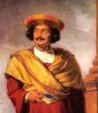
Founded in 1828 in Calcutta by pioneer social reformer Raja Ram Mohan Roy (1772 – 1833), the movement fought against idol worship, polytheism, caste oppression, unnecessary rituals and other social evils like Sati, polygamy, purdah system, child marriage, etc. The society also strove for women’s rights like widow remarriage and education of women. It also fought attacked prevailing superstitions among Hindus.

ARYA SAMAJ (Revivalist)

Arya Samaj

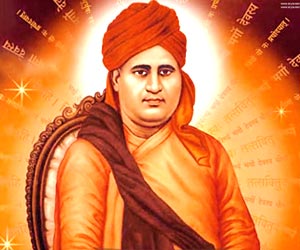
Founded in 1875 in Bombay by Swami Dayanand Saraswati, this society strove against idolatry, polytheism, rituals, priesthood, animal sacrifice, child marriage and the caste system. It also encourages the dissemination of western scientific knowledge.
:

THEOSOPHICAL SOCIETY

THEOSOPHICAL SOCIETY

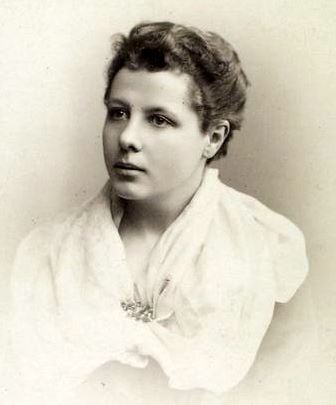
Though Annie Besant’s name is most associated with this society, it was actually founded by Madame Blavatsky and Colonel Olcott in New York (later shifted to Madras) in 1875. It promoted the study of ancient Hindu, Buddhist and Zoroastrian philosophies. It promoted the concept of universal brotherhood as expounded in the Upanishads and Vedas. It laid stress on occultism.

RAMAKRISHNA MISSION

RAMAKRISHNA MISSION

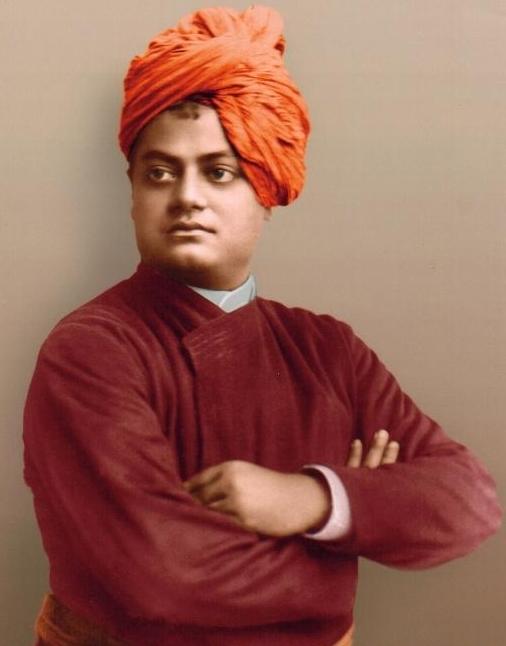
This mission was founded by Swami Vivekananda in 1892 in Belur near Calcutta to promote the teachings of Vivekananda’s Guru Ramakrishna Paramahansa. It opposed the caste system and untouchability. It focused on the universality of all religions and propagated Vedanta.

SATYASHODHAK SAMAJ

SATYASHODHAK SAMAJ

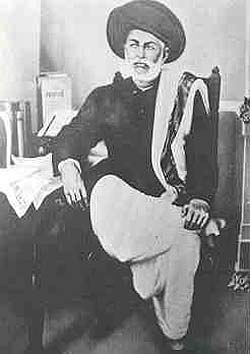
This society was founded by Jyotirao Govindrao Phule on 24 September 1873 in present-day Maharashtra. It campaigned against idolatry and the caste system. It advocated rational thinking and rejected priesthood. Jyotirao Phule is said to have used the term ‘Dalit’ for the oppressed castes.

YOUNG BENGAL MOVEMENT

This movement was started by Henry Louis Vivian Derozio in Calcutta in the 1820s. Derozio was an Anglo-Indian college teacher in Calcutta and he encouraged radical thinking among his students. He criticised the prevailing religious practices of orthodox Hinduism. He also inspired free-thinking and propagated the spirit of liberty, equality and freedom.

ALIGARH MOVEMENT (Reformist)

ALIGARH MOVEMENT (Reformist)

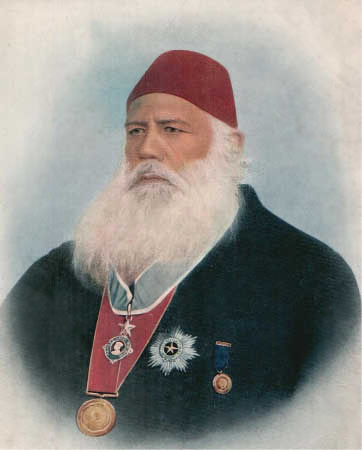
This movement was started by Sir Sayyid Ahmed Khan in the 1860s in Aligarh, Uttar Pradesh. It focused on spreading western scientific education among the Muslim masses in India.

WIDOW REMARRIAGE ASSOCIATION

This was founded by Vishnu Shastri Pandit and Mahadev Govind Ranade in Bombay in 1861. It promoted widow remarriage and campaigned against child marriages, the heavy cost of marriages and customs-like the shaving of widow’s head, etc.

DEOBAND MOVEMENT

This was started in 1867 in Deoband in UP by theologians, Muhammad Qasim Nanawatawi and Rashid Ahmad Gangohi. It was an anti-British movement that aimed at uplifting the Muslims through educational efforts

.

Differences among the major land revenue systems in British India i.e. Zamindari, Ryotwari and Mahalwari

Zamindari System (Permanent Land Revenue Settlement)

Wednesday, February 16, 2022

Indigo Revolt Causes, Course And Assessment

Causes of Indigo Revolt

  • Indigo cultivation started in Bengal in 1777. Indigo was in high demand worldwide and its trade was seen as a lucrative opportunity due to the demand for blue dye in Europe. Due to the monopoly of European planters over the indigo plant, Indian farmers were forced to grow indigo by signing fraudulent deals with them.
  • The cultivators were given advanced loans and were forced to grow indigo in place of food crops. Once the farmers took loans, they could never repay them due to the high rates of interest, and to add to that were the tax rates which were quite exorbitant making the farmers brutally oppressed resulting in farmers either not paying the rent or refusing to do as asked by the planters.
  • Another oppressive act against the farmers was that they were forced to sell indigo at non-profitable rates. This was done to maximize European planters’ profits. In case a farmer refused to grow indigo, the planters resorted to illegal means. Farmers were made to face brutal attacks which includes looting and burning crops, kidnapping the farmer’s family members, etc.

    Course of Indigo Revolt

    One such incident occurred in the Nadia district of Bengal where the indigo farmers revolted by refusing to grow indigo and attacked the policemen who intervened. In response to this, the planters increased the rents leading to more agitations against the oppression. All the farmers of the Barasat division went on a strike and refused to grow indigo.Farmers were led by the Biswas brothers of Nadia, which made it a deadly revolt as it was suppressed and many farmers were slaughtered by the government and some of the zamindars.

    This revolt was backed by the Bengali intelligentsia, Muslims, and the missionaries i.e. all in all, the whole of the rural population supported the revolt. This was even supported by the press and played its part in portraying the plight of the farmers and fighting for their cause.

    Assessment of the Indigo Revolt

    Ultimately, Indigo Revolt was a largely non-violent revolt and in later years acted as a precursor to Gandhi's non-violent satyagraha, and though, it was not a spontaneous one as it was built up over years of oppression of the farmers by the planters and the government.Another important point was that the Hindus and Muslims joined hands against their oppressors in this rebellion. It also saw the coming together of many zamindars with the riots or farmers.The revolt was a success despite its brutal quelling by the government with a notification was also issued which stated that farmers could not be forced to grow indigo which in response to the revolt, the government appointed the Indigo Commission in 1860, ‘not a chest of Indigo reached England without being stained with human blood.’

Tuesday, February 15, 2022

Quit India Movement / August Kranti ( Indian National Movement )

Quit India Movement

On 8th Aug 2021, India completed 79 years of Quit India Movement also known as August Kranti.

Key Points

  • About:
    • On 8th August 1942, Mahatma Gandhi gave a clarion call to end the British rule and launched the Quit India Movement at the session of the All-India Congress Committee in Mumbai.
    • Gandhiji gave the call “Do or Die” in his speech delivered at the Gowalia Tank Maidan, now popularly known as August Kranti Maidan.
    • Aruna Asaf Ali popularly known as the 'Grand Old Lady' of the Independence Movement is known for hoisting the Indian flag at the Gowalia Tank Maidan in Mumbai during the Quit India Movement.
    • The slogan ‘Quit India’ was coined by Yusuf Meherally, a socialist and trade unionist who also served as Mayor of Mumbai.
      • Meherally had also coined the slogan “Simon Go Back”.
  • Causes:
    • Failure of Cripps Mission : The immediate cause for the movement was the collapse of Cripps Mission.
      • About: Under Stafford Cripps, the mission was sent to resolve the Indian question of a new constitution and self-government.
      • Reasons Behind Cripps Mission: Japanese aggression in South-East Asia, keenness of British Government to secure the full participation of India in the war, mounting pressure from China and the United States, as well as from the Labour Party in Britain, led British Prime Minister Winston Churchill to send the Cripps Mission to India in March 1942.
      • Reasons for Collapse: It failed because it offered India not complete freedom but the Dominion Status to India, along with the partition.
    • Involvement of India in World War II without prior consultation with the leaders:
      • The British assumption of unconditional support from India to British in World War ll was not taken well by the Indian National Congress.
    • Prevalence of anti-British Sentiment:
      • The anti-British sentiments and demand for full-independence had gained popularity among indian masses.
    • Centralisation of Many Small Movements:
      • The two decades of mass movement which were being conducted on a much more radical tone under the leadership of the various associated and affiliated bodies of the Congress, like All India Kisan Sabha, Forward Bloc etc. had already prepared the ground for the movement.
      • There were militant outbursts happening at several places in the country which got channelized with the Quit India Movement.
    • Shortage of Essential Commodities:
      • The economy was also in shatters as a result of World War II.
  • Demands:
    • The demand was to end the British rule in India with immediate effect to get the cooperation of Indians in World War-II against fascism.
    • There was a demand to form a provisional government after the withdrawal of the Britishers.
  • Phases: The movement had three phases:
    • First Phase, urban revolt, marked by strikes, boy­cott and picketing, which were quickly suppressed.
      • There were strikes and demonstrations all over the country and workers provided the support by not working in the factories.
      • Gandhiji was soon imprisoned at Aga Khan Palace in Pune and almost all leaders were arrested.
    • In the second phase, the focus shifted to the countryside, which witnessed a major peasant rebellion, marked by destruction of communication sys­tems, such as railway tracks and stations, telegraph wires and poles, attacks on government buildings or any other visible symbol of colo­nial authority.
    • The last phase witnessed the formation of national governments or parallel governments in isolated pockets (Ballia, Tamluk, Satara etc.)

Successes of the Movement

  • Rise of Future Leaders:
    • Underground activities were taken by leaders that included Ram Manohar Lohia, J.P. Narayan, Aruna Asaf Ali, Biju Patnaik, Sucheta Kriplani, etc which later emerged as prominent leaders.
  • Women Participation:
    • Women took active participation in the movement. Female leaders like Usha Mehta helped set up an underground radio station which led to the awakening about the movement.
  • Rise of Nationalism:
    • greater sense of unity and brotherhood emerged due to the Quit India Movement. Many students dropped out of schools and colleges, people gave up their jobs and withdrew money from the banks.
  • Paved the way for Independence:
    • While the Quit India campaign was crushed in 1944, with the British refusing to grant immediate independence, saying it could happen only after the war had ended, they came to the important realization that India was ungovernable in the long run due to the cost of World War II.
    • It changed the nature of political negotiations with British, ultimately paving the way for India's independence.

Failure of the Movement

  • Brutal Repression:
    • The movement saw violence at some places which was not premeditated.
    • The movement was violently suppressed by the British – people were shot, lathi-charged, villages burnt and enormous fines imposed.
    • Over 1,00,000 people were arrested and the government resorted to violence in order to crush the agitation.
  • Lack of Support:
    • Muslim League, the Communist Party of India and the Hindu Mahasabha did not support the movement. The Indian bureaucracy also did not support the movement.
      • The League was not in favour of the British leaving India without partitioning the country first.
      • The Communist party supported the British since they were allied with the Soviet Union.
      • The Hindu Mahasabha openly opposed the call for the Quit India Movement and boycotted it officially under the apprehension that the movement would create internal disorder and would endanger internal security during the war.
    • Meanwhile, Subhas Chandra Bose, organised the Indian National Army and the Azad Hind government from outside the country.
    • Many Congress members like C Rajagopalachari resigned from the provincial legislature as they did not favour Mahatma Gandhi's ideology.

Gandhian Ideologies


Gandhian Ideologies

What is Gandhian ideology?

  • Gandhian ideology is the set of religious and social ideas adopted and developed by Mahatma Gandhi, first during his period in South Africa from 1893 to 1914, and later in India.
  • Gandhian philosophy is not only simultaneously political, moral and religious, it is also traditional and modern, simple and complex. It embodies numerous Western influences to which Gandhiji was exposed, but is rooted in ancient Indian culture harnessing universal moral & religious principles.
  • The philosophy exists on several planes - the spiritual or religious, moral, political, economic, social, individual and collective.
    • The spiritual or religious element, and God, are at its core.
    • Human nature is regarded as fundamentally virtuous.
    • All individuals are believed to be capable of high moral development, and of reform.
  • Gandhian ideology emphasises not on idealism, but on practical idealism.
  • Gandhian philosophy is a double-edged weapon. Its objective is to transform the individual and society simultaneously, in accordance with the principles of truth and non-violence.
  • Gandhiji developed these ideologies from various inspirational sources vis Bhagvad Geeta, Jainism, Buddhism, Bible, Gopal Krishna Gokhale, Tolstoy, John Ruskin among others.
    • Tolstoy's book 'The Kingdom of God is within you' had a deep influence on Mahatma Gandhi.
    • Gandhiji paraphrased Ruskin's book 'Unto this Last' as 'Sarvodaya'.
  • These ideas have been further developed by later "Gandhians", most notably, in India by, Vinoba Bhave and Jayaprakash Narayan and outside of India by Martin Luther King Jr. and others.

Major Gandhian Ideologies

  • Truth and nonviolence: They are the twin cardinal principles of Gandhian thoughts.
    • For Gandhi ji, truth is the relative truth of truthfulness in word and deed, and the absolute truth - the ultimate reality. This ultimate truth is God (as God is also Truth) and morality - the moral laws and code - its basis.
    • Nonviolence, far from meaning mere peacefulness or the absence of overt violence, is understood by Mahatma Gandhi to denote active love - the pole opposite of violence, in every sense. Nonviolence or love is regarded as the highest law of humankind.
  • Satyagraha: Gandhi ji called his overall method of nonviolent action Satyagraha. It means the exercise of the purest soul-force against all injustice, oppression and exploitation.
    • It is a method of securing rights by personal suffering and not inflicting injury on others.
    • The origin of Satyagraha can be found in the Upanishads, and in the teachings of Buddha, Mahavira and a number of other other greats including Tolstoy and Ruskin.
  • Sarvodaya- Sarvodaya is a term meaning 'Universal Uplift' or 'Progress of All'. The term was first coined by Gandhi ji as the title of his translation of John Ruskin's tract on political economy, "Unto This Last".
  • Swaraj- Although the word swaraj means self-rule, Gandhi ji gave it the content of an integral revolution that encompasses all spheres of life.
    • For Gandhi ji, swaraj of people meant the sum total of the swaraj (self-rule) of individuals and so he clarified that for him swaraj meant freedom for the meanest of his countrymen. And in its fullest sense, swaraj is much more than freedom from all restraints, it is self-rule, self-restraint and could be equated with moksha or salvation.
  • Trusteeship- Trusteeship is a socio-economic philosophy that was propounded by Gandhi ji.
    • It provides a means by which the wealthy people would be the trustees of trusts that looked after the welfare of the people in general.
    • This principle reflects Gandhi ji’s spiritual development, which he owed partly to his deep involvement with and the study of theosophical literature and the Bhagavad Gita.
  • Swadeshi The word swadeshi derives from Sanskrit and is a conjunction of two Sanskrit words. ‘Swa’ means self or own and ‘desh’ means country. So swadesh means one's own country. Swadeshi, the adjectival form, means of one’s own country, but can be loosely translated in most contexts as self-sufficiency.
    • Swadeshi is the focus on acting within and from one's own community, both politically and economically.
    • It is the interdependence of community and self-sufficiency.
    • Gandhi ji believed this would lead to independence (swaraj), as British control of India was rooted in control of her indigenous industries. Swadeshi was the key to the independence of India, and was represented by the charkha or the spinning wheel, the “center of the solar system” of Mahatma Gandhi’s constructive program.

Relevance in Today’s Context

  • The ideals of truth and nonviolence, which underpin the whole philosophy, are relevant to all humankind, and are considered as universal by the Gandhians.
  • More than ever before, Mahatma Gandhi's teachings are valid today, when people are trying to find solutions to the rampant greed, widespread violence, and runaway consumptive style of living.
  • The Gandhian technique of mobilising people has been successfully employed by many oppressed societies around the world under the leadership of people like Martin Luther King in the United States, Nelson Mandela in South Africa, and Aung San Suu Kyi in Myanmar, which is an eloquent testimony to the continuing relevance of Mahatma Gandhi.
  • Dalai Lama said, "We have a big war going on today between world peace and world war, between the force of mind and force of materialism, between democracy and totalitarianism." It is precisely to fight these big wars that the Gandhian philosophy needed in contemporary times.

In my life, I have always looked to Mahatma Gandhi as an inspiration, because he embodies the kind of transformational change that can be made when ordinary people come together to do extraordinary things." -Barack Obama

Conclusion

  • Gandhian ideologies shaped the creation of institutions and practices where the voice and perspective of everyone can be articulated, tested and transformed.
    • According to him, democracy provided the weak with the same chance as the strong.
  • Functioning on the basis of voluntary cooperation and dignified & peaceful co-existence was replicated in several other modern democracies. Also, his emphasis on political tolerance and religious pluralism holds relevance in contemporary Indian politics.
  • Truth, nonviolence, Sarvodaya and Satyagraha and their significance constitute Gandhian philosophy and are the four pillars of Gandhian thought.

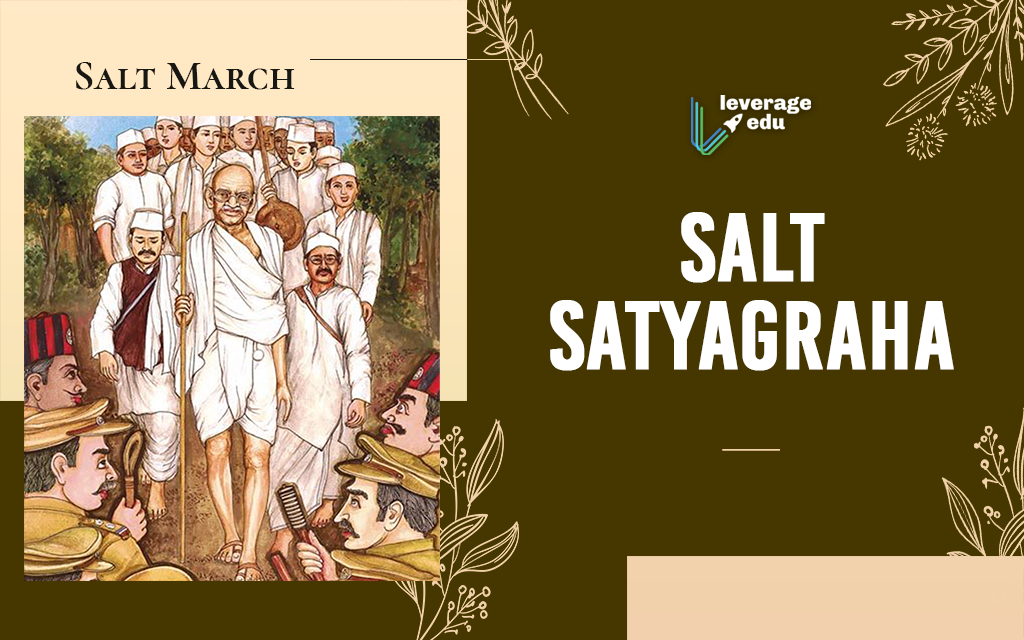
Salt Satyagraha Movement,Salient Features of Salt Satyagraha.

Sunday, February 13, 2022

Formation Of Muslim League And Its Objectives

Formation of Muslim League and its Objectives


The partition of Bengal created a communal divide. On December 30, 1906, Muslim league was formed under the leadership of Aga Khanthe Nawab of Dhaka and Nawab Mohsin-ul-Mulk to the notion to safeguard the rights of Indian Muslims. Initially, it gets great support from the British but when it adopted the notion of Self-rule then they get destitution from them. The Amritsar session of the League, held in 1908, under the presidentship of Sir Syed Ali Imam, demanding a separate electorate for the Muslims, this was conceded to them by his Morley-Minto Reform 1909. Maulana Muhammad Ali started an English Journal ‘Comrade’ and an Urdu.

Paper ‘Hamdard’ to propagate his anti-league views. He also started ‘Al-Hilal ‘which served as a mouthpiece of his Nationalist views.

Factor promoting the Muslim league

  • British Plan- Dividing Indian on communal lines and adhered separatist attitude in Indian politics. For example- Separate electorate, Played caste politics between non- Brahmins and Brahmins.
  • Lacks of Education- Muslims were isolated from western and technical education.
  • Loss Sovereignty by Muslims- 1857 revolt makes British to think that Muslims are dangerous for their colonial policy. As they were established their rule after dethroning the Mughal rule.
  • Expression of Religious Colour-Most of the historians and radical nationalists glorified India’s one side of our composite culture. They praises were biased because Shivaji, Rana Pratap etc were paraises but they remained silent on Akbar, Sher Shah Suri, Allauddin Khalji, Tipu Sultan  etc.
  • Economic backwardness of India- Lack of Industrialisation causes acute unemployment and British attitude towards cottage industry was pathetic

Objectives of the formation of league

To promote loyalty of Indian Muslims towards the British government.

To protect the political and other rights of the Indian Muslims and to place their needs and aspirations before the Government.

To overcome on the feeling of hostility among Muslims towards other communities.


Key Points of Indian National Congress Sessions

Key Points of Indian National Congress Sessions

1)Initially the 1st session of the INC to be held at Poona. Later the venue was shifted to Bombay(Present Mumbai), the reason being an outburst of the epidemic in Poona. The place in Bombay where the session took place was Gokuldas Tejpal Sanskrit Pathshala.

2) After the first session a few important demands from the Indian side were presented before the British. Some of them are:-

a)To assign a council to enquire the performance of the Indian Administration. Also, the Indian Commission which was situated in London should be abolished.

b)The people who were considered moderates raised questions on the authority of the Secretary of State to administer India. They demanded the creation of a legislative council for the North-West Frontier Province (NWFP), Sindh, and Awadh.

c)The Legislative interests were to add more Indians in the legislature so that it could be more responsive to the people of India. They coveted that the Indians should be given the power to discuss the budget and also the right to question the Governance.

d)Modulation of Military Expenditure and the request to direct the civil services examination in India and England simultaneously.


Congress Session 1886

The following session of the Congress happened to be under the guidance of Dadabhai Naoroji in Calcutta(Present Kolkata). The number of members had progressed to 434. After the session, Congress decided to set up Congress Committees across the country. And these committees will be provisional.


Congress Session 1887

This session was held at Madras(Present Chennai). And for the first time in history, it was presided by a Muslim member Syed Badrudding Tyabj. Also, an appeal was made before the Muslims to join hands with other national leaders.


Congress Session 1892

It was the eighth session of the Indian National Congress and was held at Allahabad. It was Presided by W.C.Bonnerjee.The Congress reprimanded the Indian Councils Act of 1892, which had just been put into execution by the colonial administration. They also stated that the Act did not give the Indian population the freedom to choose their leaders.


Congress Session 1895

It was the eleventh session of INC which was held at Poona(Present Pune). The Congress Session had a sturdy rise in the number of representatives from 1163 in 1894 to 1584. An exhilarated President Surendranath Banerjea praised the Congress for inducing the disseminated particles of a broad and diversified community and addressing them reverberate with the new innate viewpoint of an awakened nationality.


Congress Session 1899

It was the fifteenth session of INC which was held at Lucknow. The Congress necessitated that the British control should put an end to the ' drain of wealth' from India to England. And this drain of wealth that had been holding place as a result of colonial rule. By raising this matter, Congress criticized a theory that constituted the very foundation of colonialism. The Congress raised this matter under the presidentship of R.C. Dutt. And R.C Dutt accompanied by Dadabhai Naoroji were continuously criticizing the British for the ‘drain of wealth’.


Congress Session 1901

This session happened at Calcutta and it was headed by Dinshaw E. Wacha. It was in this session that Mahatma Gandhi (Father of the Nation)arrived on the Congress platform. Back then he was a lawyer in South Africa. Gandhi Ji requested the Congress to strengthen the struggle fronting racial discrimination and exploitation in South Africa through their support.


Congress Session 1904

This session happened at Bombay(Present Mumbai)and it was headed by Sir Henry Cotton. The Congress objected to the demolition of rules by Lord Curzon as he used funds from India for his advancing policy in Tibet. The Congress also marked its outstanding remonstrance against the Curzon committee’s recommendation to partition Bengal, an area that was at the vanguard of the anti-British struggle.


Congress Session 1906

This session happened at Calcutta(Present Kolkata)and it was headed by Dadabhai Naoroji. Congress coined the word ‘Swaraj’ and declared that this word is the aim of the movement. To counter the expanding influence of the radicals, the moderates requested Dadabhai Naoroji to arrive from England to lead the session. Dadabhai Naoroji said that in self-government lies our hope, strength, and greatness.


Congress Session 1910

This session happened at Allahabad which was headed by Sir William Wedderburn. Mohammad Ali Jinnah, a 44-year-old lawyer and constantly with the Congress, condemned the colonial regime’s firmness to include separate electorates for Hindus and Muslims in municipalities and local bodies. Jinnah affirmed that this would shake the friendly relations between the two communities. It was very ironic that Jinnah was displayed as the main hero of a separate Muslim state after 25years.


Congress Session 1915

The most prominent accomplishment of the 1915 Bombay Session was that the structure of the Congress was pleasantly changed to allow the members from the extreme segment. Tilak answered by declaring the willingness of his followers to re-enter the Congress. As a conclusion, the number of delegates rose to 2259 from 866 a year back.


Congress Session 1916

This Lucknow Session symbolized the union of the moderates and extremists in the Congress but also the closing of positions within the Congress and the All India Muslim League.


Congress Session 1917

The Congress received the first woman President Annie Besant at the Calcutta Session.


Congress Session 1918

Congress, at the Special Session in Bombay, named the Montague-Chelmsford reformations as inferior. It asked for the Declaration of Rights for the people of India and affirmed that Indian lawmakers should possess the same tempo of Financial Autonomy as the Self-governing Dominions.


Congress Session 1919

At the 34th Session which was held in Amritsar(1919). Congress showed its profound solidarity for the people who were killed in the Jallianwala Bagh incident. Under the presidency of Motilal Nehru, the Congress convicted the incident in the strongest of terms.


Congress Session 1920

At its Nagpur Session, Congress attempted to strengthen the Non-Cooperation Movement. It asked dealers to ostracize any immigrant business associations and asked the government servants to help the nationwide event. The significance of using non-violent means was restated. The party also made certain necessary organizational transformations. The power of the A I. C. C. increased to 350 and a Working Committee of 15 members was created.


Congress Session 1921

In the Ahmedabad session, Hakim Ajmal Khan was commonly chosen to lead over Session in the absence of C.R. Das.C.R.Das was in jail at that time. Gandhiji was designated as the sole administrative influence of the Congress and endowed with broad powers of the AICC. Chairs and benches for members were excluded and Khadi tents were used for the first time.


Congress Session 1922

At the Gaya Session, Congress leaders discussed the advantages and disadvantages of maintaining its boycott of the government-created directorates. While the 'no-changers' led by C Rajagopalachari and faithful to Gandhiji supported maintaining the boycott, the Swarajists directed by C.R. Das suggested participating in the councils.


Join Our Telegram Channel


Rowlatt Act and Jallianwala Bagh Massacre (1919)

Rowlatt Act and Jallianwala Bagh Massacre (1919)

  • The Rowlatt Act was passed in March 1919 by the Central Legislative Council to control the militant nationalist struggles and curtailed the liberty of the people.
  • The Bill provided for speedy trial of offences by a special court and had no appeal.
  • The provincial government had powers to search a place and arrest a suspected person without warrant. These gave unbridled powers to the government to arrest and imprison suspects without trial for two years maximum.
  • It caused a wave of anger in all sections spreading a country-wide agitation by Gandhiji and marked the foundation of the Non-Cooperation Movement. Gandhiji organised the Satyagraha on 14th February, 1919. On 8th April, 1919 Gandhiji was arrested.

Jallianwala Bagh Massacre, also called Massacre of Amritsar was an incident in which British troops fired on a large crowd of unarmed Indians in an open space known as the Jallianwala Bagh in Amritsar in Punjab.


Jallianwala Bagh massacre:

    • April 13, 1919, marked a turning point in the Indian freedom struggle.
    • It was Baisakhi that day, a harvest festival popular in Punjab and parts of north India.
    • Local residents in Amritsar decided to hold a meeting that day to discuss and protest against the confinement of Satya Pal and Saifuddin Kitchlew, two leaders fighting for Independence, and implementation of the Rowlatt Act, which armed the British government with powers to detain any person without trial.
    • The crowd had a mix of men, women and children.
    • They all gathered in a park called the Jallianwala Bagh, walled on all sides but for a few small gates, against the orders of the British.
    • The protest was a peaceful one, and the gathering included pilgrims visiting the Golden Temple who were merely passing through the park, and some who had not come to protest.
    • While the meeting was on, Brigadier-General Reginald Edward Harry Dyer, who had crept up to the scene wanting to teach the public assembled a lesson, ordered 90 soldiers he had brought with him to the venue to open fire on the crowd.
    • Many tried in vain to scale the walls to escape. Many jumped into the well located inside the park.

Response of the Indians:

    • This tragedy came as a rude shock to Indians and totally destroyed their faith in the British system of justice.
    • National leaders condemned the act and Dyer unequivocally.
    • Nobel laureate Rabindranath Tagore in his letter of protest renounced the knighthood conferred on him, condemning the brutal act of Britishers.
    • In protest against the massacre and the British failure to give due justice to the victims, Gandhiji relinquished his title ‘Kaiser-e-hind’ bestowed on him by the British for his services during the Boer War in South Africa.
    • In December 1919, the congress session was held at Amritsar. It was attended by a large number of people, including peasants.

British and Government of India Response:

    • Gen Dyer was appreciated by many in Britain and the British in India although some people in the British government were quick to criticize it.
    • The massacre had been a calculated act and Dyer declared with pride that he had done it to produce ‘moral effect’ on the people and that he had made up his mind that he would shoot down all men if they were going to continue the meeting.
    • The government set up the Hunter Commission to inquire into the massacre. Although the commission condemned the act by Dyer, it did not impose any disciplinary action against him.
    • He was relieved of his duties in the army in 1920.
    • A British newspaper called it as one of the bloody massacres of modern history.

One of the worst acts of violence:

    • Large gathering of 15,000-20,000 people with a majority of Sikhs came together to celebrate the Punjabi harvest festival of Baisakhi in this garden.
    • They had also gathered to revolt against the repressive Rowlatt Act that provided for stricter control of the press, arrests without warrant and indefinite detention without trial.
    • The people were unarmed and British surrounded them and opened fire brutally.
    • Even after that British was not empathetic but responded with brutal repression in the following ways.
    • Seeking to humiliate and terrorize people, Satyagrahis were forced to rub their noses on the ground.
    • They were forced to crawl on the streets, and do salaam (salute) to all sahibs.
    • People were flogged and villages (around Gujranwala in Punjab) were bombed.
    • For Indians this added the fuel to fire and national movement was taken forward more intensively
    • Leaders heavily criticized the government with Tagore renouncing his knighthood as protest.
    • The whole nation came together protesting against British so this incident brought unity to India which was essential for the freedom movement.

Turning point in Indian national movement:

    • By the end of the 19th century, British rule, in India as well as across the globe, had gained a certain legitimacy even in the eyes of the enslaved public.
    • Till then, most Indians had reconciled with the progressive nature of the colonial rule.
    • Jallianwala Bagh shattered the faith that the people had in the British sense of justice and fairness.
    • To most Indians, the massacre of the unarmed was a betrayal of the trust that they had placed on the British to rule them wisely, justly and with fairness.
    • In the eyes of the Indian, the just, fair and liberal British suddenly turned into a ruthless, bloodthirsty tyrant who couldn’t be trusted. Jallianwala Bagh revealed the evil that resided in the ‘enlightened’ empire.
    • Since then, it was a slow but sure downward slide for British rule in India. It was on this sense of betrayal that Gandhi built his mass movement, which put a premium on breaking the laws made by the rulers.
    • As the people began to willfully break the laws made by the state, the state itself became illegitimate. Now people actively started demanding for purna swaraj.

Friday, February 11, 2022

The Revolt Of 1857 — A Mighty Uprising

The Revolt Of 1857: Know its Causes, Impact & Reasons For Failure

Join Our Telegram Channel 


The revolt of 1857 was a mighty uprising in India against the unjust rule of British East India Company. The revolt of 1857 was largely confined to Northern and Central India. The expansionist policies, administrative innovations and economic exploitations of the British East India Company in India over the years, resulted in discontent among the people of India. It was this discontent that led to the great revolt of 1857.

  • Though earlier there were several insurrections such as The Vellore mutiny of 1806, Bareilly uprising of 1816 etc., against the British rule, the revolt of 1857 was a massive and violent one, which shook the British East India Company.
  • Many Indian nationalists considered it as the first war of Indian independence. Since the revolt began as a military uprising, it is also known as sepoy mutiny of 1857.

Causes Of Revolt Of 1857

All sections of the society, right from rulers to peasants and traders, were affected adversely by the expansionist and imperialist policies put forth by the British East India Company. The cause for the revolt of 1857 was not confined to a particular policy or event, rather it involved various factors from political, economic, administrative and socio-religious aspects. These causes are discussed briefly below,

Economic Causes

  • Under the land revenue policies introduced by the British East India Company, heavy taxes were collected from the peasants, for which they obtained loans from the money lenders and traders at higher interests. In case of non-payment, their lands were confiscated by the money lenders thereby depriving them of the source of livelihood.
  • Since several Indian states were annexed by the Britishers, the rulers were no longer able to be the patrons of the artisans and craftworkers which in turn led them to misery.
  • The Indian industries and handicrafts were destroyed by the economic policies of British East India Company. By imposing high tariff duties on Indian goods, they brought down the export of cotton and silk which ended completely by the mid nineteenth century.


Administrative Causes

  • The administration of the British East India Company was inefficient as well as insufficient. Despite the recommendations tabled by Sir Thomas Munro regarding the employment of Indians, no steps were taken by the British on that front.
  • There was rampant corruption in the company’s administration.


Political Causes

  • Under the Doctrine of Lapse policy introduced by the British East India Company, the adopted children of the rulers were refused to be accepted as legal heirs and their right to succession were decided by them. This aroused rulers such as Nana Sahib, Rani Lakshmibai against the unjust policies of British.
  • They introduced aggressive policies such as Subsidiary alliance and effective control and gradually they began to intervene in the internal affairs of state which caused discontent in minds of the rulers.
  • Post the death of the Mughal ruler, Faqir-ud-Din, Lord Canning announced that the prince in succession should renounce the regal titles and the ancestral properties of the Mughal empire. This affected the sentiments of Indian Muslims.

.

Socio- Religious Causes

  • The socio-religious reforms brought about by the British such as abolition of Sati system, support to widow remarriage etc., were not accepted by a large section of the society.
  • By introducing the Religious Disabilities Act, they attempted to modify the hindu customs.
  • Further the denounced idolatry worship, ridiculed Hindu gods and goddesses and were against the superstitious beliefs and practises.


Military Causes

  • The Indian sepoys were restricted from wearing any caste or sectarian marks.
  • There was resentment, when Canning’ government passed the General Service Enlistment Act, which stated that the future recruits of the Bengal Army should be prepared to serve anywhere as demanded by the British Government.
  • The cartridges of the Enfield rifle introduced by the British were greased with the beef and pig fat. This affected the religious sentiments of both Hindu as well as Muslims. This was dubbed to be the immediate cause for the revolt of 1857.

Course Of Revolt Of 1857 in Chronological Order

The simmering discontent among the Indian sepoys against the British East India Company were further fuelled by the order to use those greased cartridges. Sepoys refused to use the greased cartridges. This was considered as an act of insubordination by the British officials and they began to impose harsh punishments for sepoys. Thus began the revolt of 1857.


Let us discuss the course of the revolt of 1857 briefly.

DateEvents
2 February 1857The 19th Native Infantry at Berhampur who refused to use the enfield rifle,  broke out in mutiny. Soon they were disbanded.
8 April 1857Mangal Pandey, a sepoy of 34th Native Infantry was executed for firing at the sergeant major and  34th Native Infantry was disbanded.
10 May 1857The revolt broke out at Meerut.
11 to 30 May 1857Bahadur Shah Zafar was proclaimed as the Emperor of India. Gradually the revolt broke out in Delhi, Bombay, Aligarh, Ferozepur, Bulandshahr, Etawah, Moradabad, Bareilly, Shahjahanpur and other stations in Uttar Pradesh.
June 1857Outbreaks at Gwalior, Jhansi, Allahabad, Faizabad, Lucknow, Bharatpur etc.,
July & August 1857Mutinies at places like Indore, Mhow, Nerbudda districts and few places in Punjab.
September 1857Delhi was recaptured by the British East India Company
November 1857General Windham was defeated by the rebels outside Kanpur.
December 1857The Battle of Kanpur was won by Sir Colin Campbell
March 1857Lucknow was recaptured by the British
April 1857Jhansi was captured by the British by fighting against Rani Laxmibai.
May 1857Bareilly, Kalpi and Jagdishpur were recaptured by the British.
July to December 1857Gradually the British authority was re-established in India.

Centers And Suppression Of Revolt Of 1857

In the following table, the storm centers of the revolt of 1857, the leaders who led the revolt at those centers and the British generals who suppressed the revolt are listed.

Centers Of RevoltLeaders Who Led The RevoltBritish Generals Who Suppressed The Revolt
DelhiGeneral Bakht KhanLieutenant Willoughby, John Nicholson and Lieutenant Hudson.
KanpurNana SahebSir Hugh Wheeler and Sir Colin Campbell.
LucknowBegum Hazrat MahalHenry Lawrence, Brigadier Inglis, Henry Havelock, James Outram and Sir Colin Campbell.
BareillyKhan BahadurJames Outram
BiharKunwar SinghSir Colin Campbell
FaizabadMaulvi AhmadullahSir Colin Campbell
JhansiRani LaxmibaiSir Hugh Rose

Reasons For Failure Of Revolt Of 1857

The causes for the failure of the revolt of 1857 are as follows,

  • The revolt was localized and lacked participation of masses across the country. It was largely confined to North India, while the south, east and west parts of the country did not participate.
  • There was no central leadership. Though the leaders of the revolt were brave enough, they could not match the experience and organising ability of the British officials.
  • The British had far superior weapons and equipment such as enfield rifles, whereas the Indian sepoys mostly fought with swords and spears.
  • Several Indian rulers such as Sindhia of Gwalior, Maharaja of Kashmir, Holkar of Indore etc refused to join the revolt of 1857. Along with them, most of the zamindars and educated Indians also did not participate.
  • Except for the anti-foreign sentiments, the Indian sepoys had no unified ideology or forward looking programme.
  • Impact Of Revolt Of 1857

    • Under the Government of India Act of 1858, dualism (Crown and Company) in the control of Indian affairs came to an end and the administrative control over India was transferred from British East India Company to the Crown.
    • British officials were appointed to hold the key positions in military and civil administration.
    • Since Indian army was the backbone of the mutiny, the British reorganised them based on the policy of divide and counterpoise.  The strength of British troops in India was increased greatly, whereas the number of Indian troops was reduced.
    • Britishers deliberately began to pursue the divide and rule policy in order to strengthen their position in India.
    • In the Queen’s proclamation, it was declared that the rights, dignity and honour of the native princes would be respected as their own by the British. In addition, Indians were promised that they would be admitted to the office of British service without any partiality, provided they meet the desired qualification. In order to implement this, the Indian Civil Service Act of 1861 was passed. However, the higher posts were held only by the English officials.


    The Revolt of 1857, an anti-colonial movement which fought against the imperialist policies of British East India Company, is an important event that took place in the Indian history. Though the revolt was suppressed later, it shook the foundation of the British rule in India. With the end of the revolt of 1857, the era of territorial aggrandisement also came to an end. However, it paved the way for the era of economic exploitation in India.

Govt removes AFSPA from parts of Nagaland, Assam and Manipur

Why in News? Recently, AFSPA has been extended for six months in Nagaland. The Centre is considering partial removal of the Arme...