Thursday, March 24, 2022

Swaraj Party,Aims,Significance,Achievements And Drawbacks Of Swaraj Party.

The Swaraj Party or the Congress-Khilafat Swarajya Party was formed on 1 January 1923 by C R Das and Motilal Nehru. The formation of the Swaraj Party came after various significant events like the withdrawal of non-cooperation movement, the government of India act 1919 and 1923 elections.


Swaraj Party – Background

How the party came into the picture can be understood by the following points mentioned below:

  • After the Chauri Chaura incident, Mahatma Gandhi withdrew the Non-Cooperation Movement  in 1922.
  • This was met with a lot of disagreements among leaders of the Congress Party.
  • While some wanted to continue non-cooperation, others wanted to end the legislature boycott and contest elections. The former were called no-changers and such leaders included Rajendra Prasad, Sardar Vallabhai Patel, C Rajagopalachari, etc.
  • The others who wanted to enter the legislative council and obstruct the British government from within were called the pro-changers. These leaders included C R Das, Motilal Neharu, Srinivasa Iyengar, etc.
  • In 1922, in the Gaya session of the Congress, C R Das (who was presiding over the session) moved a proposal to enter the legislatures but it was defeated. Das and other leaders broke away from the Congress and formed the Swaraj Party.
  • C R Das was the President and the Secretary was Motilal Nehru.
  • Prominent leaders of the Swaraj Party included N C Kelkar, Huseyn Shaheed Suhrawardy and Subhas Chandra Bose.

Aims Of Swaraj Party

The Congress-Khilafat Swarajya Party or the Swaraj Party aimed for:

  • Attaining dominion status.
  • Obtaining the right to frame a constitution.
  • Establishing control over the bureaucracy.
  • Obtaining full provincial autonomy.
  • Attaining Swarajya (self-rule).
  • Getting people the right to control government machinery.
  • Organising industrial and agricultural labour.
  • Controlling the local and municipal bodies.
  • Having an agency for propaganda outside the country.
  • Establishing a federation of Asian countries to promote trade and commerce.
  • Engaging in the constructive programmes of the Congress.

Significance of Swaraj Party

  • Gandhiji and both the pro-changers and the no-changers realised the importance of putting up a united front in order to get reforms from the government.
  • So, it was decided that the Swarajists would contest elections as a separate ‘group’ within the Congress Party. 
  • The Swaraj Party won 42 out of 104 seats to the Central Legislature in 1923.
  • The party’s programme was to obstruct the government. They wanted to create deadlocks on every measure.
  • They boycotted all official functions and receptions held by the government.
  • They voiced their grievances and aspirations in the Legislative Assembly.

.

Swaraj Party and its Achievements

  • Swarajist Vithalbhai Patel became speaker of the Central Legislative Assembly in 1925.
  • They outvoted the government many times even in matters related to budgetary grants.
  • They were able to defeat the Public Safety Bill in 1928.
  • They exposed the weaknesses of the Montague Chelmsford Reform.
  • They gave fiery speeches in the Assembly on self-rule and civil liberties.

Drawbacks of Swaraj Party

  • They could not coordinate their struggle inside the Assembly with the mass freedom struggle outside.
  • They totally relied on newspapers to carry their work and message in the Assembly to the outside world.
  • Some of them could not resist the perks of power. Motilal Nehru was a member of the Skeen Committee and A Ramaswamy Iyengar was a member of the Public Accounts Committee.
  • Their policy of obstructionism had its flaws and limitations.
  • The death of C R Das in 1925 further weakened the party.
  • There were internal divisions among the Swarajists. They were divided into the responsivists and the non-responsivists. The responsivists (M M Malaviya, Lala Lajpat Rai, N C Kelkar) wanted to cooperate with the government and hold offices, whereas the non-responsivists (Motilal Nehru) withdrew from legislatures in 1926.
  • The party was in shambles when it went into the 1926 elections, and as a result, did not perform well.
  • The party’s failure to support the peasant cause in Bengal led to a loss of support of many members.
  • The party merged with the Congress in 1935.

Tuesday, March 22, 2022

UPSC Booklist Recommended By Toppers | Latest Booklist for UPSC 2022

“What are the best UPSC Books?” "How many books are too many books?" are some thoughts that resonate with almost all the aspirants especially when it is about the IAS book list. When it comes to preparing a UPSC booklist for Civil Services, you may find yourself buying every book that is present in the book store. But wait, you need to shortlist and get your hands on the right ones. So, when you sit with those books to finally read, many-a-times thoughts like "too many books, too little time" make you feel distraught!

Hence, to make you worry a little less and study a little more, we have compiled an exhaustive booklist for UPSC that is recommended by toppers. You should follow only a specific UPSC book list in order to ensure you're not digressing too much from the core syllabus. Please note that you do not have to read all the books in their entirety. Make sure you download our micro-topics syllabus PDF and read the books provided in the UPSC booklist in accordance with it. That way, you'll be able to keep yourself focused on the actual UPSC syllabus.

Let's have a list of UPSC booklist that is sure to help you with an exhaustive preparation of UPSC.

Booklist for UPSC CSE Prelims

Although the booklist for UPSC may vary in accordance with your previous knowledge and expertise, here is an exhaustive booklist that both fresh aspirants and experienced ones can refer to for their UPSC Preparation needs. Some of the books may be relevant for both Prelims and Mains. Before checking it out, it is important that you know the syllabus and exam pattern well. Check out this article to know about UPSC Exam Pattern And Syllabus.

Check out the table below to know the UPSC booklist to refer to while studying for Civil Services Prelims examination.

Paper

Booklist

General Studies-1

  1. NCERTs of History, Geography & Polity Class 8th-12th

  2. India’s Struggle for Independence by Bipan Chandra

  3. Certificate of Physical Geography by GC Leong

  4. Indian Polity by M Laxmikanth

  5. Indian Economy by Ramesh Singh

  6. Current Affairs - The Hindu, Yojna Magazine, Kurukshetra Magazine

  7. Oxford World Atlas

  8. International Relations NCERT XI and XII

  9. Indian Culture- Spectrum

  10. NIOS Course Materials

CSAT

  1. Verbal & Non-Verbal Reasoning - RS Agarwal

  2. TMH CSAT Manual

  3. Quicker Maths by M.Tyra

  4. English Grammar & Composition Wren & Martin


Booklist for UPSC CSE Mains

Here is the UPSC booklist that you should be reading while preparing for UPSC CSE Mains:

Paper

Booklist

General Studies -1


  1. India’s Struggle for Independence by Bipan Chandra

  2. India After Independence by Bipan Chandra

  3. Ancient India by RS Sharma

  4. History of Medieval India by Satish Chandra

  5. From Plassey To Partition And After by Sekhar Bandyopadhyay

  6. Introduction to Indian Art for Class XI (NCERT)

  7. Geography of India - Majid Hussain

  8. World Geography- Majid Hussain

  9. Oxford Atlas

  10. Central Physical and Human Geography by GC Leong

  11. Geography NCERTs (Class XI  and XII)

General Studies-2


  1. Indian Polity by M Laxmikanth

  2. Constitution of India by DD Basu

  3. India’s Foreign Policy by Rajiv Sikri

General Studies -3


  1. Indian Economy by Ramesh Singh

General Studies -4


  1. Ethics, Integrity & Aptitude by Subba Rao and PN Rao Chaudhry


NCERT Booklist for UPSC

Here is a list of all the titles of NCERT books for UPSC that every aspirant should read for preparation for the UPSC exam:

Subject

Title of the NCERT Book For UPSC

History


  • History: NCERT Class VI – Our Past

  • History: NCERT Class VII – Our Past -I

  • History: NCERT Class VIII – Our Past II and III

  • History: NCERT Class IX – India and the Contemporary World – I

  • History: NCERT Class X – India and the Contemporary World – II

  • History: NCERT Class XI – Themes In World History

  • History: NCERT Class XII – Themes In Indian History – I

  • History: NCERT Class XII – Themes in Indian History – II

  • History: NCERT Class XII – Themes In Indian History – III

Art & Culture


  • Art & Culture: NCERT Class XI – An Introduction to Indian Art,

  • Art & Culture: NCERT Class XI – Living Craft Traditions of India (Chapters 9 & 10)

Polity


  • Polity: NCERT Class IX – Political Science: Democratic Politics Part – I

  • Polity: NCERT Class X – Political Science: Democratic Politics Part – II

  • Polity: NCERT Class XI – Political Science: Indian Constitution at Work

  • Polity: NCERT Class XI – Political Science: Political Theory

  • Polity: NCERT Class XII – Political Science I: Contemporary World Politics

  • Polity: NCERT Class XII – Political Science II: Politics in India since Independence

Geography


  • Geography: NCERT Class VI – The Earth Our Habitat

  • Geography: NCERT Class VII – Our Environment

  • Geography: NCERT Class VIII – Resource and Development

  • Geography: NCERT Class IX – Contemporary India – I

  • Geography: NCERT Class X – Contemporary India – II

  • Geography: NCERT Class XI – Fundamentals of Physical Geography

  • Geography: NCERT Class XI – India – Physical Environment

  • Geography: NCERT Class XII – Fundamentals of Human Geography

  • Geography: NCERT Class XII – India – People and Economy

Economy


  • Economy: NCERT Class IX – Economics

  • Economy: NCERT Class X – Understanding Economic Development

  • Economy: NCERT Class XI – Indian Economic Development

  • Economy: NCERT Class XII – Introductory Microeconomics

  • Economy: NCERT Class XII – Introductory Macroeconomics

Environment & Ecology


  • Biology: NCERT Class XII (Last 4 chapters) Sankar IAS Environment and Ecology


Saturday, March 19, 2022

What is inflation and how it works? What do you mean by inflation? What are the 3 types of inflation? What are the main causes of inflation? Who benefits from inflation? How do we prevent inflation? What are the effects of a rise in the inflation rate?What is the inflation rate formula?How to calculate inflation rate?

What is inflation and how it works?

Inflation is an economic indicator that indicates the rate of rising prices of goods and services in the economy. Ultimately it shows the decrease in the buying power of the rupee. It is measured as a percentage.

This percentage indicates the increase or decrease from the previous period. Inflation can be a cause of concern as the value of money keeps decreasing as inflation rises. 

What do you mean by inflation?

Inflation is a quantitative economic measure of a rate of change in prices of selected goods and services over a period of time. Inflation indicates how much the average price has changed for the selected basket of goods and services. It is expressed as a percentage. Increase in inflation indicates a decrease in the purchasing price of the economy.

What are the 3 types of inflation?

The three types of Inflation are Demand-Pull, Cost-Push and Built-in inflation.

Demand-pull Inflation: It occurs when the demand for goods or services is higher when compared to the production capacity. The difference between demand and supply (shortage) result in price appreciation.

Cost-push Inflation: It occurs when the cost of production increases. Increase in prices of the inputs (labour, raw materials, etc.) increases the price of the product. 

Built-in Inflation: Expectation of future inflations results in Built-in Inflation. A rise in prices results in higher wages to afford the increased cost of living. Therefore, high wages result in increased cost of production, which in turn has an impact on product pricing. The circle hence continues. 

What are the main causes of inflation?

Monetary Policy: It determines the supply of currency in the market. Excess supply of money leads to inflation. Hence decreasing the value of the currency.

Fiscal Policy: It monitors the borrowing and spending of the economy. Higher borrowings (debt), result in increased taxes and additional currency printing to repay the debt.

Demand-pull Inflation: Increases in prices due to the gap between the demand (higher) and supply (lower).

Cost-push Inflation: Higher prices of goods and services due to increased cost of production.

Exchange Rates: Exposure to foreign markets are based on the dollar value. Fluctuations in the exchange rate have an impact on the rate of inflation. 

Who benefits from inflation?

Inflation being a cause of concern for the economy, doesn’t affect everyone in a bad way. It is a boon for a certain set of people. While consumers lose a part of their purchasing power to inflation, investors gain from it.

Investors investing in assets affected by inflation, if held on for a long time will certainly benefit from it. For example, an increase in housing prices might affect consumers. However, those who have already bought a house will benefit from capital appreciation. 

How do we prevent inflation?

To prevent inflation, the primary strategy is to change the monetary policy by adjusting the interest rates. Higher interest rates decrease the demand in the economy. This results in lower economic growth and therefore, lower inflation. Other ways to prevent inflation are:

Controlling the money supply can also help in preventing inflation.

Higher Income Tax rate can reduce the spending, and hence resulting in lesser demand and inflationary pressures.

Introducing policies to increase the efficiency and competitiveness of the economy helps in reducing the long term costs. 

What are the effects of a rise in the inflation rate?

A rise in an inflation rate can cause more than a fall in purchase power.

  • Inflation could lead to economic growth as it can be a sign of rising demand.
  • Inflation could further lead to an increase in costs due to workers demand to increase wages to meet inflation. This might increase unemployment as companies will have to lay off workers to keep up with the costs.
  • Domestic products might become less competitive if inflation within the country is higher. It can weaken the currency of the country. 

What is the inflation rate formula?

Inflation rate formula is the difference between initial CPI and final CPI divided by initial CPI. The result then multiplied by 100 gives the inflation rate.

Rate of Inflation = (Initial CPI – Final CPI/ Initial CPI)*100

CPI= Consumer Price Index

How to calculate inflation rate?

Inflation is calculated using the Consumer Price Index (CPI). Inflation can be calculated for any product by following these steps.

  • Determine the rate of the product at an earlier period.
  • Determine the current rate of the product
  • Use the inflation rate formula (Initial CPI – Final CPI/ Initial CPI)*100. Here CPI is the rate of the product.
  • This gives the increase/decrease percentage in the price of the product. One can use this to compare the inflation rate over a period of time.
Here we used only one product to calculate inflation. However, the Ministry of Statistics calculates inflation using a basket of selected goods and services   

Rebasing The GDP Of India

Rebasing The GDP Of India


Central Statistics Office (CSO) proposes to replace the gross domestic product (GDP) series of 2011-12 base year with a new set of National Accounts using 2017-18 as the base year.

The chief statistician at CSO has also said that the replacement will be done as soon as the new consumer expenditure survey and the Annual Survey of Industries (ASI) results become available.

Background:

For the past four years, there has been a raging controversy over the current GDP figures on account of questionable methodologies and databases used.

  • Officials data entails that-
  • The annual economic growth rate has sharply decelerated to about 5% in the latest quarter, from over 8?ew years ago.
  • Data also said that the annual GDP growth rates during the last few years may have been overestimated by 0.36 to 2.5 percentage points.

Reasons for Distrust in the Official GDP Figures:

  • In order to understand the dispute related to the methodologies and databases used, one has to go back to early 2015 when the CSO released a new series of GDP with 2011-12 as base-year, replacing the earlier series with the base-year 2004-05.
  • Periodic rebasing of GDP series every seven to 10 years is carried out to account for the changing economic structure and relative prices. 
  • Such rebasing usually led to a marginal rise in the absolute GDP size on account of better capturing of domestic production using improved methods and new databases. 
  • However, the underlying growth rates seldom change, meaning that the rebasing does not alter the underlying pace of economic expansion.

Change in Growth in the new base year:

  • The absolute GDP size in the new base year 2011-12 contracted by 2.3% (compared to the old series), and the annual GDP growth rate went up sharply from 4.8% in the old series to 6.2% in 2013-14. 
  • Similarly, the manufacturing sector growth rate for 2013-14, swung from (-) 0.7% in the old series to (+) 5.3% in the 2011-12 series. 

The higher growth estimates recorded by the new series did not square with related economic indicators such as-

  • Bank credit growth
  • Industrial capacity utilisation or fixed investment growth. 

Previous concerns of rebasing the GDP with 2011-12:

The released data of GDP with 2011-12 as base-year by CSO did not reflect the macroeconomic parameters like tax revenues, credit growth, trade performance, corporate sales, profits, more importantly, the level of investment in the economy etc.

  • Bank Credit Growth: The Bank Credit Growth has averaged 20.3?tween FY07 to FY12 and 12.3?tween FY13 to FY18.
  • GDP Growth: During the same tenure, the GDP growth rates have averaged 6.7% and 6.9% respectively (against the older growth rates of 8% and 6.9% respectively).
  • Investment Growth: In the case of the investment growth, there has been inconsistency in between FY07 to FY12, the growth rate of investment was 10.7% and 5.3?tween FY13 to FY18.
  • Tax Collections: In between FY07 to FY12, the tax collections have grown by 16.5% and then post that by 13.8%. Tax collections directly linked to the economic growth.

Know the root of the problem:

The source of the problem, according to many economists, is the underlying methodologies for calculating GDP (in the 2011-12 series) which they claim are deeply flawed.

  • Criticism made on Changes:

The methodological changes made in the 2011-12 base-year revision have adversely impacted the quality of SDP estimates on two counts. 

  • First, the Ministry of Corporate Affairs data does not have factory identifiers (that is, the location of production units, but only has the location of the company head office); it has distorted distribution of the SDP estimates across States. 
  • Second, for estimating value-added in the informal or unorganised sector, State-specific labour productivity estimates are unavailable in the 2011-12 series. Hence the method used distorts output estimation.

CSO on Criticism:

  • The CSO has denied the claim that the underlying methodology is flawed and that there are serious problems with the new database being used. 
  • They pointed that the 2011-12 GDP series follows global best practices (meaning, following the latest United Nations System of National Accounts guidelines) and applies better methods using much larger datasets;

Way Ahead:

The proposed change over to a new base-year of 2017-18, is, in principle, a welcome decision.  Doubts will persist so long as the underlying methodological apparatus remains the same; feeding it with up-to-date data is unlikely to improve its quality.

Conversely, if a new rebased series is introduced without any changes it will only entrench the existing methodological problems.

In view of the problems with the current series, 

  • A chorus of academic and public voices has proposed setting up an independent commission of national and international experts to review the GDP methodology. 
  • The data/results should be realistic and reflective of the ground reality. 
  • Opinion and involvement of experts are needed to make the methodologies and calculations more transparent.


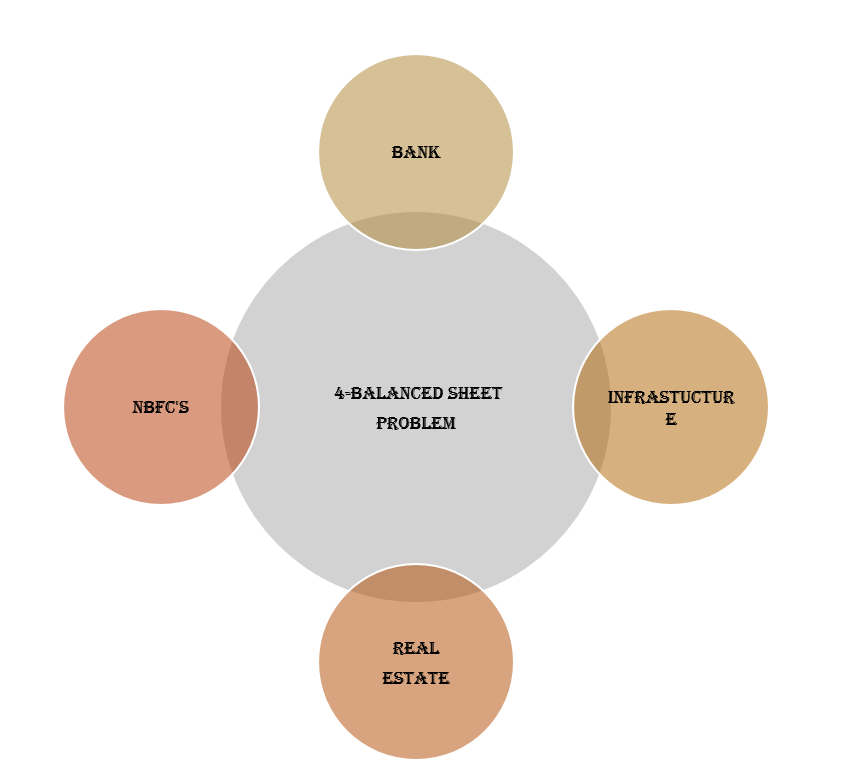
Four Balance Sheet Problem


The Four balance sheet problem first appeared in the report titled ‘India’s Great Slowdown’: Subramanian, former Chief Economic Adviser to the Government of India.

Context 

  • The GDP numbers are worrying enough, but the disaggregated data are even more distressing as the Production of consumer and investment goods is falling.

State of the Indian economy

  • India's long-term growth has slowed as the 3 engines propelling rapid growth – investment, exports and consumption.
  • Declining Investments 
  • The RBI, which tracks capital expenditure (CAPEX plans of the private corporate sector finds that both the 'animal spirits' and the 'business sentiments' are missing since 2010-11.
  • In the RBI report says the year 2017-18 "marked the seventh successive annual contraction in the private corporate sector's CAPEX plans".
  • Plummeting exports 
  • As per the softening of commodity prices including crude, the US-China trade war, Brexit and developments in Iran, Turkey and other Gulf nations further aggravated the problem of the world economy.
  • India’s exports contracted 6.57% in September as shipments of petroleum, engineering, gems & jewellery and chemicals.
  • Stagnant Consumption 
  • According to CSO, private consumption expenditure decelerated to an 18-quarter low of 3.1% in the June quarter. 
  • Rise of the ride-sharing economy and a mindset reset among younger consumers are taking a toll on automobile sales.
  • Low rural wages and high food prices have further harmed the consumption.


About the problem of Four balance sheet problem causing great Indian Slowdown 

  • The Great Slowdown stems from a balance sheet crisis that arrived in two waves
  • The first wave :
  • The Twin Balance Sheet crisis: encompassing banks and infrastructure companies
  • The problem began after the global financial crisis when the world economy slowed down.
  • The second wave 
  • The collapse of a credit boom, led by NBFCs, and the real estate sector
  • The collapse owed to the recognition that the boom involved unsustainable financing of a rising inventory of unsold housing
  • As a result, the economy now confronts a Four Balance Sheet (FBS) problem.

Challenges before the government to solve the 4-balance sheet problem 

  • Limitation of the RBI’s monetary policy 
  • Monetary policy is stymied by a broken transmission mechanism, which impedes the pass-through of cuts in policy rates to lending rates.
  • No Scope for Fiscal stimulus
  • The fiscal deficit is already high.
  • larger bond issues will only further crowd out the private sector, by pushing up already-high interest rates.
  • Strengthened IBC cannot solve the crisis in power-sector and real estate
  • Power Sector -Unlike most assets, private power firms cannot be easily sold,
  • They are incurring heavy operational losses.
  •  But neither can they be liquidated
  • In real estate, the IBC will provide only partial compensation to the prospective owners and delayed justice .
  • Non-possibility of the private sector-led solution: 
  • The viability of power assets is inextricably entwined with government policies. 
  • For example, demand for power depends on whether the state electricity boards are financially strong enough to buy the power that the public is demanding.

India witnessing cooperative federalism failure as state finances strangulates 

About the issue 

  • Kerala government reportedly stuck to its stance of maintaining the dual rate structure
  • It goes against the idea and spirit of cooperative federalism
  • More states are to follow suit

Reason for such a move 

  • Centre delaying compensation to states for their revenue loss. 
  • Under the Goods and Services Tax (Compensation to States) Act, states have to be compensated if their revenue growth falls below 14 per cent each year over the 2015-16 base year. 
  • The shortfall in Compensation cess: Amount being collected through the compensation cess will not be enough to compensate for the shortfall in collections this year. 
  • Reduction in tax devolution to states.
  • Tax devolution to states will also be lower this year as the Centre’s revenues will fall short of its budgeted target. 
  • Lower revenues for states will force them to cut back on capital spending, further intensifying the slowdown.

Demands of the states 

  • States are likely to press for extending the compensation period by a few years.
  • Raising tax rates to shore up collections.
  • State governments have asked for relaxing the fiscal deficit limit to 4 per cent. 

Way-forward

  • Rate rationalization
  • As in some sectors, inputs are taxed at higher rates as compared to final products 
  • Raising taxes when the economy is slowing down would have been counterproductive
  • Review of GST architecture: the need for the comprehensive review of the GST architecture, in line with the issues flagged by the CAG.

Wayforward 

As per the recommendation of the 

  • Recognition of a problem: A new asset quality review to get a more honest recognition of the magnitude of stressed assets, and further strengthening the IBC.
  • Special resolution mechanisms for two sectors: Real estate and power.
  • For eg-In, the power sector the  loans, exceeding Rs 2.5 trillion, of the books of the banks, for that would free up balance sheets and management attention, 
  • Allowing banks to focus again on their core business of supporting economic growth.
  • Establishment of a holding company
  • Holding company would operate like a public-sector asset rehabilitation agency-a “bad bank. 
  • The holding company would buy power companies at prices based on the recommendations of independent parties, such as investment banks, 
  • The  special regulatory regime established by the  government would establish for these assets would overlook the independent parties
  • Such an open, ruled-based procedure would allow the transaction to be seen as fair by all stakeholders: The holding company, banks, and perhaps most importantly, the public. 
  • In addition, fair prices would give the holding company a chance to make a profit in the long run as power demand increases. 
  • 5-year clause: this objective should state that the purpose of the holding company is to sell off the assets within five years, after which it would be dissolved. 
  • Reducing uncertainties: Especially by securing long-term contractual arrangements for coal inputs to be supplied by Coal India and output to be purchased by state electricity boards. Once this is done, and as demand for electricity grows to the point where the plants can operate at somewhere close to full capacity, the appetite for these assets will gradually revive, at which point they could be sold.
  • Reselling of assets to the private sector:
  • The ultimate objective would be to sell the plants back to the private sector.
  • Eventually, the gap will close between the supply and demand once the capacity utilization increases.
  • The asset will be profitable and they can be sold.
  • Government exiting the power sector: The Centre and states, should phase out the older environmentally inefficient public sector plants

The bad banks are not magical solutions. They will take some time to establish, and will require difficult political choices, in particular about how to allocate the costs amongst creditors, promoters, homeowners, and taxpayers. The Great Slowdown is upon us. Two bad banks to resolve the Four Balance Sheet problem might be one critical element of the solution.

Thursday, March 17, 2022

"рд╣ोрд▓ी"— рд░ंрдЧों рдХा рдд्рдпोрд╣ाрд░

рд╣ोрд▓ी рдХा рдкрд░्рд╡ рд╣िрди्рджुрдУं рдХे рдж्рд╡ाрд░ा рдордиाрдпे рдЬाрдиे рд╡ाрд▓े рдк्рд░рдоुрдЦ рдд्рдпोрд╣ाрд░ों рдоें рд╕े рдПрдХ рд╣ै। рд╣ोрд▓ी рдкूрд░े рднाрд░рдд рдоें рдмрд╣ुрдд рд╣ी рдзूрдордзाрдо рд╕े рдордиाрдпा рдЬाрдиे рд╡ाрд▓ा рдд्рдпोрд╣ाрд░ рд╣ै। рд╣рд░ рднाрд░рддрд╡ाрд╕ी рд╣ोрд▓ी рдХा рдкрд░्рд╡ рд╣рд░्рд╖ рдФрд░ рдЙрд▓्рд▓ाрд╕ рдХे рд╕ाрде рдордиाрддे рд╣ैं। рд╕рднी рд▓ोрдЧ рдЗрд╕ рджिрди рдЕрдкрдиे рд╕ाрд░े рдЧिрд▓े, рд╢िрдХрд╡े рднुрд▓ा рдХрд░ рдПрдХ рджुрд╕рд░े рдХो рдЧрд▓े рд▓рдЧाрддे рд╣ैं। рд╣ोрд▓ी рдХे рд░ंрдЧ рд╣рдо рд╕рднी рдХो рдЖрдкрд╕ рдоें рдЬोреЬрддा рд╣ै рдФрд░ рд░िрд╢्рддों рдоें рдк्рд░ेрдо рдФрд░ рдЕрдкрдирдд्рд╡ рдХे рд░ंрдЧ рднрд░рддा рд╣ै। рд╣рдоाрд░ी рднाрд░рддीрдп рд╕ंрд╕्рдХृрддि рдХा рд╕рдмрд╕े реЩूрдмрд╕ूрд░рдд рд░ंрдЧ рд╣ोрд▓ी рдХे рдд्рдпोрд╣ाрд░ рдХो рдоाрдиा рдЬाрддा рд╣ै। рд╕рднी рдд्рдпोрд╣ाрд░ों рдХी рддрд░рд╣ рд╣ोрд▓ी рдХे рдд्рдпोрд╣ाрд░ рдХे рдкीрдЫे рднी рдХрдИ рдоाрди्рдпрддाрдПं рдк्рд░рдЪрд▓िрдд рд╣ै। рд╣ोрд▓ी рдХैрд╕े рдордиाрддे рд╣ैрд╣ोрд▓ी рдХा рдорд╣рдд्рд╡ рдХ्рдпा рд╣ैрд╣ोрд▓िрдХा рдХौрди рдеी рдЗрди рд╕рднी рдХी рдЬाрдирдХाрд░ी рд╣рдо рдЖрдкрдХो рдЕрдкрдиे рдЗрд╕ рдкोрд╕्рдЯ рдХे рдЬрд░िрдпे рджेंрдЧे। рдЗрд╕рдХे рд╕ाрде рд╕्рдХूрд▓ों рдФрд░ рдХॉрд▓ेрдЬों рдоें рдЫाрдд्рд░ों рд╕े рд╣ोрд▓ी рдкрд░ рдиिрдмंрдз рд▓िрдЦрдиे рдХे рд▓िрдП рдХрд╣ा рдЬाрддा рд╣ै। рд╣рдоाрд░े рдЗрд╕ рдкोрд╕्рдЯ рд╕े рдЫाрдд्рд░ рд╣ोрд▓ी рдХे рдмाрд░े рдоें рдЕрдзिрдХ рдЬाрдирдХाрд░ी рд╣ाрд╕िрд▓ рдХрд░ рд╕рдХрддे рд╣ैं рдЬिрд╕рд╕े рд╡े рд╕्рдХूрд▓ рдпा рдХॉрд▓ेрдЬ рдоें рдЕрдЪ्рдЫे рд╕े рдиिрдмंрдз рдк्рд░рддिрдпोрдЧिрддा рдоें рднाрдЧ рд▓े рд╕рдХें।

рд╣ोрд▓ी рд╣рд░ рд╕ाрд▓ рдлाрд▓्рдЧुрди (рдоाрд░्рдЪ) рдХे рдорд╣ीрдиे рдоें рдорд╣ीрдиे рдоें рд╡िрднिрди्рди рдк्рд░рдХाрд░ рдХे рд░рдЧों рдХे рд╕ाрде рдордиाрдИ рдЬाрддी рд╣ै। рд╕рднी рдШрд░ों рдоें рддрд░рд╣ рддрд░рд╣ рдХे рдкрдХрд╡ाрди рдмрдиाрдпे рдЬाрддे рд╣ैं। рд╣ोрд▓ी рд╣िंрджुрдУं рдХे рдПрдХ рдк्рд░рдоुрдЦ рдд्рдпोрд╣ाрд░ рдХे рд░ूрдо рдоें рдЬाрдиा рдЬाрддा рд╣ै। рд╣ोрд▓ी рд╕िрд░्рдл рд╣िрди्рджुрдУं рд╣ी рдирд╣ीं рдмрд▓्рдХि рд╕рднी рд╕рдоुрджाрдп рдХे рд▓ोрдЧों рдж्рд╡ाрд░ा рдЙрд▓्рд▓ाрд╕ рдХे рд╕ाрде рдордиाрдпा рдЬाрддा рд╣ै। рд╣ोрд▓ी рдХा рдд्рдпोрд╣ाрд░ рд▓ोрдЧ рдЖрдкрд╕ рдоें рдоिрд▓рдХрд░, рдЧрд▓े рд▓рдЧрдХрд░ рдФрд░ рдПрдХ рджूрд╕рд░े рдХो рд░ंрдЧ рд▓рдЧाрдХрд░ рдордиाрддे рд╣ैं। рдЗрд╕ рджौрд░ाрди рдзाрд░्рдоिрдХ рдФрд░ рдлाрдЧुрди рдЧीрдд рднी рдЧाрдпे рдЬाрддे рд╣ैं। рдЗрд╕ рджिрди рдкрд░ рд╣рдо рд▓ोрдЧ рдЦाрд╕рддौрд░ рд╕े рдмрдиे рдЧुрдЬिрдпा, рдкाрдкрдб़, рд╣рд▓рд╡ा, рдЖрджि рдЦाрддे рд╣ैं। рд░ंрдЧ рдХी рд╣ोрд▓ी рд╕े рдПрдХ рджिрди рдкрд╣рд▓े рд╣ोрд▓िрдХा рджрд╣рди рдХिрдпा рдЬाрддा рд╣ै।

рд╣ोрд▓ी рдХा рдд्рдпौрд╣ाрд░ рдордиाрдиे рдХे рдкीрдЫे рдПрдХ рдк्рд░ाрдЪीрди рдЗрддिрд╣ाрд╕ рд╣ै। рдк्рд░ाрдЪीрди рд╕рдордп рдоें рд╣िрд░рдг्рдпрдХрд╢्рдпрдк рдиाрдо рдХे рдПрдХ рдЕрд╕ुрд░ рд╣ुрдЖ рдХрд░рддा рдеा। рдЙрд╕рдХी рдПрдХ рджुрд╖्рдЯ рдмрд╣рди рдеी рдЬिрд╕рдХा рдиाрдо рд╣ोрд▓िрдХा рдеा। рд╣िрд░рдг्рдпрдХрд╢्рдпрдк рд╕्рд╡рдпं рдХो рднрдЧрд╡ाрди рдоाрдирддा рдеा। рд╣िрд░рдг्рдпрдХрд╢्рдпрдк рдХे рдПрдХ рдкुрдд्рд░ рдеे рдЬिрд╕рдХा рдиाрдо рдк्рд░рд╣्рд▓ाрдж рдеा। рд╡े рднрдЧрд╡ाрди рд╡िрд╖्рдгु рдХे рдмрд╣ुрдд рдмреЬे рднрдХ्рдд рдеे। рд╣िрд░рдг्рдпрдХрд╢्рдпрдк рднрдЧрд╡ाрди рд╡िрд╖्рдгु рдХे рд╡िрд░ोрдзी рдеा। рдЙрди्рд╣ोंрдиे рдк्рд░рд╣्рд▓ाрдж рдХो рд╡िрд╖्рдгु рдХी рднрдХ्рддि рдХрд░рдиे рд╕े рдмрд╣ुрдд рд░ोрдХा। рд▓ेрдХिрди рдк्рд░рд╣्рд▓ाрдж рдиे рдЙрдирдХी рдПрдХ рднी рдмाрдд рдирд╣ीं рд╕ुрдиी। рдЗрд╕рд╕े рдиाрд░ाреЫ рд╣ोрдХрд░ рд╣िрд░рдг्рдпрдХрд╢्рдпрдк рдиे рдк्рд░рд╣्рд▓ाрдж рдХो рдЬाрди рд╕े рдоाрд░рдиे рдХा рдк्рд░рдпाрд╕ рдХिрдпा। рдЗрд╕рдХे рд▓िрдП рд╣िрд░рдг्рдпрдХрд╢्рдпрдк рдиे рдЕрдкрдиी рдмрд╣рди рд╣ोрд▓िрдХा рд╕े рдорджрдж рдоांрдЧी। рдХ्рдпोंрдХि рд╣ोрд▓िрдХा рдХो рдЖрдЧ рдоें рди рдЬрд▓рдиे рдХा рд╡рд░рджाрди рдоिрд▓ा рд╣ुрдЖ рдеा। рдЙрд╕рдХे рдмाрдж рд╣ोрд▓िрдХा рдк्рд░рд╣्рд▓ाрдж рдХो рд▓ेрдХрд░ рдЪिрддा рдоें рдмैрда рдЧрдИ рд▓ेрдХिрди рдЬिрд╕ рдкрд░ рд╡िрд╖्рдгु рдХी рдХृрдкा рд╣ो рдЙрд╕े рдХ्рдпा рд╣ो рд╕рдХрддा рд╣ै рдФрд░ рдк्рд░рд╣्рд▓ाрдж рдЖрдЧ рдоें рд╕ुрд░рдХ्рд╖िрдд рдмрдЪे рд░рд╣े рдЬрдмрдХि рд╣ोрд▓िрдХा рдЙрд╕ рдЖрдЧ рдоें рдЬрд▓ рдХрд░ рднрд╕्рдо рд╣ो рдЧрдИ।

рдпрд╣ рдХрд╣ाрдиी рдпे рдмрддाрддी рд╣ै рдХि рдмुрд░ाрдИ рдкрд░ рдЕрдЪ्рдЫाрдИ рдХी рдЬीрдд рдЕрд╡рд╢्рдп рд╣ोрддी рд╣ै। рдЖрдЬ рднी рд╕рднी рд▓ोрдЧ рд▓рдХрдб़ी, рдШाрд╕ рдФрд░ рдЧोрдмрд░ рдХे рдв़ेрд░ рдХो рд░ाрдд рдоें рдЬрд▓ाрдХрд░ рд╣ोрд▓िрдХा рджрд╣рди рдХрд░рддे рд╣ैं рдФрд░ рдЙрд╕рдХे рдЕрдЧрд▓े рджिрди рд╕рдм рд▓ोрдЧ рдПрдХ рджूрд╕рд░े рдХो рдЧुрд▓ाрд▓, рдЕрдмीрд░ рдФрд░ рддрд░рд╣-рддрд░рд╣ рдХे рд░ंрдЧ рдбाрд▓рдХрд░ рд╣ोрд▓ी рдЦेрд▓рддे рд╣ैं। рд╣ोрд▓ी рд╣рд░ рд╕ाрд▓ рдлाрд▓्рдЧुрди рдорд╣ीрдиे рдоें рдордиाрдИ рдЬाрддी рд╣ै। рдЬैрд╕े рдЬैрд╕े рд╣ोрд▓ी рдХा рдд्рдпोрд╣ाрд░ рдкाрд╕ рдЖрддा рд╣ै рд╣рдоाрд░ा рдЙрдд्рд╕ाрд╣ рднी рдмреЭрддा рдЬाрддा рд╣ै। рд╣ोрд▓ी рд╕рдЪ्рдЪे рдЕрд░्рдеों рдоें рднाрд░рддीрдп рд╕ंрд╕्рдХृрддि рдХा рдк्рд░рддीрдХ рд╣ै, рдЬिрд╕рдХे рд░ंрдЧ рдЕрдиेрдХрддा рдоें рдПрдХрддा рдХो рджрд░्рд╢ाрддे рд╣ैं। рд▓ोрдЧ рдПрдХ рджूрд╕рд░े рдХो рдк्рд░ेрдо-рд╕्рдиेрд╣ рдХी рдЧुрд▓ाрд▓ рд▓рдЧाрддे рд╣ैं , рд╕ांрд╕्рдХृрддिрдХ рдХाрд░्рдпрдХ्рд░рдоों рдХा рдЖрдпोрдЬрди рдХिрдпा рдЬाрддा рд╣ै, рд▓ोрдХрдЧीрдд рдЧाрдпे рдЬाрддे рд╣ैं рдФрд░ рдПрдХ рджूрд╕рд░े рдХा рдоुँрд╣ рдоीрдаा рдХрд░рд╡ाрддे рд╣ैं।

рднाрд░рдд рдоें рд╣ोрд▓ी рдХा рдЙрдд्рд╕рд╡ рдЕрд▓рдЧ-рдЕрд▓рдЧ рдк्рд░рджेрд╢ों рдоें рдЕрд▓рдЧ рдЕрд▓рдЧ рддрд░ीрдХे рд╕े рдордиाрдпा рдЬाрддा рд╣ै। рдЖрдЬ рднी рдм्рд░рдЬ рдХी рд╣ोрд▓ी рд╕ाрд░े рджेрд╢ рдХे рдЖрдХрд░्рд╖рдг рдХा рдмिंрджु рд╣ोрддी рд╣ै। рд▓рдардоाрд░ рд╣ोрд▓ी рдЬो рдХि рдмрд░рд╕ाрдиे рдХी рд╣ै рд╡ो рднी рдХाрдл़ी рдк्рд░рд╕िрдж्рдз рд╣ै। рдЗрд╕рдоें рдкुрд░ुрд╖ рдорд╣िрд▓ाрдУं рдкрд░ рд░ंрдЧ рдбाрд▓рддे рд╣ैं рдФрд░ рдорд╣िрд▓ाрдПँ рдкुрд░ुрд╖ों рдХो рд▓ाрдаिрдпों рддрдеा рдХрдкрдб़े рдХे рдмрдиाрдП рдЧрдП рдХोрдб़ों рд╕े рдоाрд░рддी рд╣ैं। рдЗрд╕ी рддрд░рд╣ рдордеुрд░ा рдФрд░ рд╡ृंрджाрд╡рди рдоें рднी резрел рджिрдиों рддрдХ рд╣ोрд▓ी рдХा рдкрд░्рд╡ рдордиाрддे рд╣ैं। рдХुрдоाрдКँ рдХी рдЧीрдд рдмैрдардХी рд╣ोрддी рд╣ै рдЬिрд╕рдоें рд╢ाрд╕्рдд्рд░ीрдп рд╕ंрдЧीрдд рдХी рдЧोрд╖्рдаिрдпाँ рд╣ोрддी рд╣ैं। рд╣ोрд▓ी рдХे рдХрдИ рджिрдиों рдкрд╣рд▓े рдпрд╣ рд╕рдм рд╢ुрд░ू рд╣ो рдЬाрддा рд╣ै। рд╣рд░िрдпाрдгा рдХी рдзुрд▓ंрдбी рдоें рднाрднी рдж्рд╡ाрд░ा рджेрд╡рд░ рдХो рд╕рддाрдП рдЬाрдиे рдХी рдк्рд░рдеा рдк्рд░рдЪрд▓िрдд рд╣ै। рд╡िрднिрди्рди рджेрд╢ों рдоें рдмрд╕े рд╣ुрдП рдк्рд░рд╡ाрд╕िрдпों рддрдеा рдзाрд░्рдоिрдХ рд╕ंрд╕्рдеाрдУं рдЬैрд╕े рдЗрд╕्рдХॉрди рдпा рд╡ृंрджाрд╡рди рдХे рдмांрдХे рдмिрд╣ाрд░ी рдоंрджिрд░ рдоें рдЕрд▓рдЧ рдЕрд▓рдЧ рддрд░ीрдХे рд╕े рд╣ोрд▓ी рдХे рд╢ृंрдЧाрд░ рд╡ рдЙрдд्рд╕рд╡ рдордиाрдпा рдЬाрддा рд╣ै। рдЬिрд╕рдоें рдЕрдиेрдХ рд╕рдоाрдирддाрдПँ рднी рдФрд░ рдЕрдиेрдХ рднिрди्рдирддाрдПँ рд╣ैं।

рдЦिрд▓ाрдлрдд рдФрд░ рдЕрд╕рд╣рдпोрдЧ рдЖंрджोрд▓рди

рдЦिрд▓ाрдлрдд рдФрд░ рдЕрд╕рд╣рдпोрдЧ рдЖंрджोрд▓рди

рдкрд░िрдЪрдп 

  • рдЬрди рдЖंрджोрд▓рди: рд╡рд░्рд╖ 1919-1922 рдоें рднाрд░рдд рдоें рдм्рд░िрдЯिрд╢ рд╢ाрд╕рди рдХा рд╡िрд░ोрдз рдХрд░рдиे рд╣ेрддु рдЦिрд▓ाрдлрдд рдФрд░ рдЕрд╕рд╣рдпोрдЧ, рджो рдЬрди рдЖंрджोрд▓рди рдЖрдпोрдЬिрдд рдХिрдпे рдЧрдП рдеे।
    • рджोрдиों рд╣ी рдЖंрджोрд▓рдиों рдоें рднिрди्рди-рднिрди्рди рдоुрдж्рджें рд╣ोрдиे рдХे рдмाрд╡реЫूрдж рдЕрд╣िंрд╕ा рдФрд░ рдЕрд╕рд╣рдпोрдЧ рдХी рдПрдХ рдПрдХीрдХृрдд рдпोрдЬрдиा рдХो рдЕрдкрдиाрдпा рдЧрдпा।
    • рдЗрд╕ рдЕрд╡рдзि рдоें рдХॉрди्рдЧ्рд░ेрд╕ рдФрд░ рдоुрд╕्рд▓िрдо рд▓ीрдЧ рдХा рдПрдХीрдХрд░рдг рджेрдЦा рдЧрдпा। рдЗрди рджोрдиों рдкाрд░्рдЯिрдпों рдХे рд╕ंрдпुрдХ्рдд рдк्рд░рдпाрд╕ рдХे рддрд╣рдд рдХрдИ рд░ाрдЬрдиीрддिрдХ рдк्рд░рджрд░्рд╢рди рдЖрдпोрдЬिрдд рдХिрдпे рдЧрдП।
  • рдЖंрджोрд▓рдиों рдХे рдХाрд░рдг: рдиिрдо्рдирд▓िрдЦिрдд рдХाрд░рдХों рдиे рджो рдЖंрджोрд▓рдиों рдХी рдкृрд╖्рдарднूрдоि рдХे рд░ूрдк рдоें рдХाрд░्рдп рдХिрдпा:
    • рд╕рд░рдХाрд░ рдХे рдХ्рд░ूрд░рддाрдкूрд░्рдг рдХाрд░्рдп:рд░ौрд▓ेрдЯ рдПрдХ्рдЯ(Rowlatt Act), рдкंрдЬाрдм рдоें рдоाрд░्рд╢рд▓ рд▓ॉ рд▓ाрдЧू рдХрд░рдиे рдФрд░рдЬрд▓िрдпाँрд╡ाрд▓ा рдмाрдЧ рд╣рдд्рдпाрдХांрдб(Jallianwala Bagh Massacre) рдиे рд╡िрджेрд╢ी рд╢ाрд╕рди рдХे рдХ्рд░ूрд░ рдФрд░ рдЕрд╕рдн्рдп рдЪेрд╣рд░े рдХो рдЙрдЬाрдЧрд░ рдХрд░рдиे рдХा рдХाрд░्рдп рдХिрдпा।
      • рдкंрдЬाрдм рдоें рд╣ो рд░рд╣े рдЕрдд्рдпाрдЪाрд░ों рдХी рдЬाँрдЪ рд╣ेрддु рдЧрдаिрдд рд╣ंрдЯрд░ рдЖрдпोрдЧ (Hunter Commission) рдХी рдкрдХ्рд╖рдкाрддрдкूрд░्рдг рд░िрдкोрд░्рдЯ।
      • рд╣ाрдЙрд╕ рдСрдл рд▓ॉрд░्рдб्рд╕ (рдм्рд░िрдЯिрд╢ рд╕ंрд╕рдж рдХे) рдоें рдЬрд▓िрдпांрд╡ाрд▓ा рдмाрдЧ рд╣рдд्рдпाрдХांрдб рдХो рд▓ेрдХрд░ рдЬрдирд░рд▓ рдбाрдпрд░ рдХी рдХाрд░्рд░рд╡ाрдИ рдХो рдЙрдЪिрдд рдард░ाрдпा рдЬाрдиा।
    • рдЕрд╕ंрддुрд╖्рдЯ рднाрд░рддीрдп: рдж्рд╡ैрдз рд╢ाрд╕рди рдХी рдЕрдкрдиी рдХुрд╡िрдЪाрд░िрдд рдпोрдЬрдиा рдХे рд╕ाрде рдоांрдЯेрдЧ्рдпू-рдЪेрдо्рд╕рдлोрд░्рдб рд╕ुрдзाрд░(Montagu-Chelmsford Reforms) рднाрд░рддीрдпों рдХी рд╕्рд╡рд╢ाрд╕рди рдХी рдмрдв़рддी рдоांрдЧ рдХो рдкूрд░ा рдХрд░рдиे рдоें рд╡िрдлрд▓ рд░рд╣े।
    • рдЖрд░्рдеिрдХ рдХрдаिрдиाрдЗрдпाँ: рдк्рд░рдердо рд╡िрд╢्рд╡ рдпुрдж्рдз рдХे рдмाрдж рдХे рд╡рд░्рд╖ों рдоें рджेрд╢ рдХी рдЖрд░्рдеिрдХ рд╕्рдеिрддि рд╡िрд╢ेрд╖рдХрд░ рд╡рд╕्рддुрдУं рдХी рдХीрдорддों рдоें рд╡ृрдж्рдзि, рднाрд░рддीрдп рдЙрдж्рдпोрдЧों рдХे рдЙрдд्рдкाрджрди рдоें рдХрдоी, рдХрд░ों рдФрд░ рдХिрд░ाрдпे рдХे рдмोрдЭ рдоें рд╡ृрдж्рдзि рдЖрджि рдХे рд╕ाрде рдФрд░ рдЦрддрд░рдиाрдХ рд╣ो рдЧрдИ рдеी।
      • рд╕рдоाрдЬ рдХे рд▓рдЧрднрдЧ рд╕рднी рд╡рд░्рдЧों рдХो рдпुрдж्рдз рдХे рдХाрд░рдг рдЖрд░्рдеिрдХ рдХрдаिрдиाрдИ рдХा рд╕ाрдордиा рдХрд░рдиा рдкрдб़ा рд░рд╣ा рдеा рдЬिрд╕рд╕े рд▓ोрдЧों рдоें рдм्рд░िрдЯिрд╢ рд╡िрд░ोрдзी рд░рд╡ैрдпा рдФрд░ рдореЫрдмूрдд рд╣ो рдЧрдпा।

рдЦिрд▓ाрдлрдд рдХा рдоुрдж्рджा:

  • рдЕंрдЧ्рд░ेрдЬों рдХे рдЦिрд▓ाрдл рддुрд░्рдХी рдХा рдЧрдардмंрдзрди: рднाрд░рдд рд╕рд╣िрдд рд╡िрд╢्рд╡ рднрд░ рдХे рдоुрд╕рд▓рдоाрди рддुрд░्рдХी рдХे рд╕ुрд▓्рддाрди рдХो рдЕрдкрдиा рдЖрдз्рдпाрдд्рдоिрдХ рдиेрддा рдЦрд▓ीрдлा (рдЦрд▓ीрдлा) рдоाрдирддे рдеे।
    • рдк्рд░рдердо рд╡िрд╢्рд╡ рдпुрдж्рдз рдХे рджौрд░ाрди рддुрд░्рдХी рдиे рдЕंрдЧ्рд░ेрдЬों рдХे рдЦिрд▓ाрдл рдЬрд░्рдордиी рдФрд░ рдСрд╕्рдЯ्рд░िрдпा рдХे рд╕ाрде рдЧрдардмंрдзрди рдХिрдпा рдеा।
  • рдЕрд╕ंрддुрд╖्рдЯ рднाрд░рддीрдп рдоुрд╕рд▓рдоाрди: рднाрд░рддीрдп рдоुрд╕рд▓рдоाрдиों рдиे рдк्рд░рдердо рд╡िрд╢्рд╡ рдпुрдж्рдз рдХे рджौрд░ाрди рдЗрд╕ рд╡िрд╢्рд╡ाрд╕  рдХे рд╕ाрде рдм्рд░िрдЯिрд╢ рд╕рд░рдХाрд░ рдХा рд╕рдорд░्рдерди рдХिрдпा рдХि рддुрд░्рдХ рд╕ाрдо्рд░ाрдЬ्рдп (Ottoman Empire) рдХे рдкрд╡िрдд्рд░ рд╕्рдеाрди рдЦрд▓ीрдлा рдХो рджे рджिрдпे рдЬाрдПрдЧे।
    • рд╣ाрд▓ांँрдХि рдк्рд░рдердо рд╡िрд╢्рд╡ рдпुрдж्рдз рдХे рдмाрдж  рддुрд░्рдХ рд╕ाрдо्рд░ाрдЬ्рдп рд╡िрднाрдЬिрдд рд╣ो рдЧрдпा рдФрд░ рддुрд░्рдХी рдХो рдЕрд▓рдЧ рдХрд░ рджिрдпा рдЧрдпा рддрдеा рдЦрд▓ीрдлा рдХो рд╕рдд्рддा рд╕े рд╣рдЯा рджिрдпा рдЧрдпा рдеा।
    • рдЗрд╕рд╕े рдоुрд╕्рд▓िрдо рдиाрд░ाрдЬ рд╣ो рдЧрдП рддрдеा рдЗрд╕े рдЦрд▓ीрдлा рдХा рдЕрдкрдоाрди рдоाрдиा। рдЕрд▓ी рднाрдЗрдпों, рд╢ौрдХрдд рдЕрд▓ी рдФрд░ рдоोрд╣рдо्рдордж рдЕрд▓ी рдиे рдм्рд░िрдЯिрд╢ рд╕рд░рдХाрд░ рдХे рдЦिрд▓ाрдл рдЦिрд▓ाрдлрдд рдЖंрджोрд▓рди рдХो рд╢ुрд░ू рдХрд░ рджिрдпा।
      •  рд╡рд░्рд╖ 1919 рд╕े 1924 рдХे рдордз्рдп рдпрд╣ рдЖंрджोрд▓рди рд╣ुрдЖ।
  • рдЦिрд▓ाрдлрдд рд╕рдоिрддि: рд╡рд░्рд╖ 1919 рдХी рд╢ुрд░ुрдЖрдд рдоें рдЕрд▓ी рдмंрджुрдУं, рдоौрд▓ाрдиा рдЕрдмुрд▓ рдХрд▓ाрдо рдЖрдЬ़ाрдж (Maulana Abul Kalam Azad), рдЕрдЬрдорд▓ рдЦाрди рдФрд░ рд╣рд╕рд░рдд рдоोрд╣ाрдиी рдХे рдиेрддृрдд्рд╡ рдоें рдЕрдЦिрд▓ рднाрд░рддीрдп рдЦिрд▓ाрдлрдд рд╕рдоिрддि рдХा рдЧрдарди рдХिрдпा рдЧрдпा рдеा рддाрдХि рдм्рд░िрдЯिрд╢ рд╕рд░рдХाрд░ рдХो рддुрд░्рдХी рдХे рдк्рд░рддि рдЕрдкрдиा рд░рд╡ैрдпा рдмрджрд▓рдиे рд╣ेрддु рдордЬрдмूрд░ рдХिрдпा рдЬा рд╕рдХे।
  • рдЗрд╕ рдк्рд░рдХाрд░ рджेрд╢рд╡्рдпाрдкी рдЖंрджोрд▓рди рд╣ेрддु рдПрдХ рдЖрдзाрд░ рдиिрд░्рдоिрдд  рдХिрдпा рдЧрдпा।
    • рдирд╡ंрдмрд░ 1919 рдоें рджिрд▓्рд▓ी рдоें рдЕрдЦिрд▓ рднाрд░рддीрдп рдЦिрд▓ाрдлрдд рд╕рдо्рдоेрд▓рди рдЖрдпोрдЬिрдд рдХिрдпा рдЧрдпा рдЬिрд╕рдоे  рдм्рд░िрдЯिрд╢ рд╕ाрдоाрдиों рдХे рдмрд╣िрд╖्рдХाрд░ рдХा рдЖрд╣्рд╡ाрди рдХिрдпा рдЧрдпा।
  • рднाрд░рддीрдп рдоुрд╕рд▓рдоाрдиों рдХी рдоांрдЧें: рднाрд░рдд рдоें рдоुрд╕рд▓рдоाрдиों рдиे рдЕंрдЧ्рд░ेрдЬों рд╕े рдиिрдо्рдирд▓िрдЦिрдд рдоाँрдЧें рдХी:
    • рдоुрд╕्рд▓िрдо рдкрд╡िрдд्рд░ рд╕्рдеाрдиों рдкрд░ рдЦрд▓ीрдлा рдХा рдиिрдпंрдд्рд░рдг рдмрд░рдХрд░ाрд░ рд░рдЦा рдЬाрдиा рдЪाрд╣िрдпे।
    • рдХ्рд╖ेрдд्рд░ीрдп рд╡्рдпрд╡рд╕्рдеा (Territorial Arrangements) рдХे рдмाрдж рдЦрд▓ीрдлा рдХो рдкрд░्рдпाрдк्рдд рдХ्рд╖ेрдд्рд░ों рджिрдпा рдЬाрдиा рдЪाрд╣िрдпे।
  • рдХॉрди्рдЧ्рд░ेрд╕ рдХा рдк्рд░ाрд░ंрднिрдХ рд░ुрдЦ: рдЦिрд▓ाрдлрдд рдЖंрджोрд▓рди рдХी рд╕рдлрд▓ рдмрдиाрдиे рд╣ेрддु рдХॉрди्рдЧ्рд░ेрд╕ рдХा рд╕рд╣рдпोрдЧ рдЖрд╡рд╢्рдпрдХ рдеा।
    • рд╣ाрд▓ांँрдХि рдорд╣ाрдд्рдоा рдЧांрдзी(Mahatma Gandhi) рдЦिрд▓ाрдлрдд рдХे рдоुрдж्рджे рдкрд░ рд╕рд░рдХाрд░ рдХे рдЦिрд▓ाрдл рд╕рдд्рдпाрдЧ्рд░рд╣ рдФрд░ рдЕрд╕рд╣рдпोрдЧ рд╢ुрд░ू рдХрд░рдиे рдХे рдкрдХ्рд╖ рдоें рдеे, рд▓ेрдХिрди рдХॉрди्рдЧ्рд░ेрд╕ рдЗрд╕ рддрд░рд╣ рдХी рд░ाрдЬрдиीрддिрдХ рдХाрд░्рд░рд╡ाрдИ рдкрд░ рдПрдХрдЬुрдЯ рдирд╣ीं рдеी।
    • рдмाрдж рдоें рдХॉрди्рдЧ्рд░ेрд╕ рдиे рдЕрдкрдиा рд╕рдорд░्рдерди рджेрдиे рдХी рдЗрдЪ्рдЫा реЫाрд╣िрд░ рдХी рдХ्рдпोंрдХि рдпрд╣ рд╣िंрджुрдУं рдФрд░ рдоुрд╕рд▓рдоाрдиों рдХो рдПрдХрдЬुрдЯ рдХрд░рдиे рдФрд░ рдРрд╕े рдЬрди рдЖंрджोрд▓рдиों рдоें рдоुрд╕्рд▓िрдо рднाрдЧीрджाрд░ी рдХो рд╢ाрдоिрд▓ рдХрд░рдиे рдХा рдПрдХ рд╕ुрдирд╣рд░ा рдЕрд╡рд╕рд░ рдеा।
    • рдоुрд╕्рд▓िрдо рд▓ीрдЧ рдиे рднी рд░ाрдЬрдиीрддिрдХ рд╕рд╡ाрд▓ों рдкрд░ рдХॉрди्рдЧ्рд░ेрд╕ рдФрд░ рдЙрд╕рдХे рдЖंрджोрд▓рди рдХो рдкूрд░्рдг  рд╕рдорд░्рдерди рджेрдиे рдХा рдлैрд╕рд▓ा рдХिрдпा рдЧрдпा।

рдЕрд╕рд╣рдпोрдЧ-рдЦिрд▓ाрдлрдд рдЖंрджोрд▓рди:

рдорд╣ाрдд्рдоा рдЧांрдзी рдХी рднूрдоिрдХा:

  • рдЧांрдзीрд╡ाрджी рдЖंрджोрд▓рдиों рдХी рд╢ुрд░ुрдЖрдд: рдЕрд╕рд╣рдпोрдЧ рдЖंрджोрд▓рди рдЕंрдЧ्рд░ेрдЬों рдХे рдЦिрд▓ाрдл рдЧांрдзीрд╡ाрджी рдЖंрджोрд▓рди рдХी рдПрдХ рд╢ुрд░ुрдЖрдд рдеी।
    • рд╡рд░्рд╖ 1915 рдоें рдорд╣ाрдд्рдоा рдЧांрдзी рджрдХ्рд╖िрдг рдЕрдл्рд░ीрдХा рд╕े рднाрд░рдд рд▓ौрдЯ рдЖрдП рддрдеा рднाрд░рддीрдпों рдкрд░ рд╣ो рд░рд╣े рдЕрдд्рдпाрдЪाрд░ों рдХे рдЦिрд▓ाрдл рдЦेрдб़ा (Kheda), рдЪंрдкाрд░рдг (Champaran) рдФрд░ рдЕрд╣рдорджाрдмाрдж рдоें рдХिрд╕ाрдиों рдФрд░ рдореЫрджूрд░ों рдХे рд╡िрд░ोрдз рдк्рд░рджрд░्рд╢рдиों рдХा рдЖрдпोрдЬрди рдХрд░рдиा рд╢ुрд░ू рдХрд░ рджिрдпा।
  • рдЕрд╕рд╣рдпोрдЧ рдХी рд╢ुрд░ुрдЖрдд: рдЬрд▓िрдпांрд╡ाрд▓ा рдмाрдЧ рд╣рдд्рдпाрдХांрдб рдоें рджрдордирдХाрд░ी рдХाрд░्рдпрд╡ाрд╣िрдпों рдФрд░ рдЙрдЪिрдд рди рд╣ोрдиे рдкрд░ рдЧांрди्рдпाрдпिрдХ рдзी рдиे рдХрд╣ा, рдХि "рд░ाрд╖्рдЯ्рд░ीрдп рд╕рдо्рдоाрди рдХी рдкुрд╖्рдЯि рдХрд░рдиे рдФрд░ рднрд╡िрд╖्рдп рдоें рдЧрд▓рддिрдпों рдХी рдкुрдирд░ाрд╡ृрдд्рддि рдХो рд░ोрдХрдиे рд╣ेрддु рдПрдХрдоाрдд्рд░ рдк्рд░рднाрд╡ी рд╕ाрдзрди рд╕्рд╡рд░ाрдЬ рдХी рд╕्рдеाрдкрдиा рд╣ै"।
    • рдирддीрдЬрддрди, 1 рдЕрдЧрд╕्рдд, 1919 рдХो рдорд╣ाрдд्рдоा рдЧांрдзी рдж्рд╡ाрд░ा рдЕрд╕рд╣рдпोрдЧ рдЖंрджोрд▓рди рдХी рдШोрд╖рдгा рдХी рдЧрдИ।
    • рдЗрд╕े рдЦिрд▓ाрдлрдд рдЖंрджोрд▓рди рдХे рд╕рдорд░्рдерди рдоें рд╢ुрд░ू рдХिрдпा рдЧрдпा рдеा।

рдЖंрджोрд▓рди рдХे рджौрд░ाрди рдХाрд░्рдпрдХ्рд░рдо:

  • рдЕрд╣िंрд╕ा рдХे рд╕ंрджेрд╢ рдХा рдк्рд░рд╕ाрд░:рдЖंрджोрд▓рди рдХी рдШोрд╖рдгा рдХे рджिрди рд▓ाрдЦों рджेрд╢рд╡ाрд╕िрдпों рдиे рдЧांрдзी рдХो рд╕рдорд░्рдерди рджेрдиे рдФрд░ рд╕рд░рдХाрд░ рдХे рдк्рд░рддिрд╡िрд░ोрдз рдк्рд░рджрд░्рд╢िрдд рдХрд░рдиे рд╣ुрдП рдХोрдИ рдХाрд░्рдп рдирд╣ीं рдХिрдпा।
    • рдЧांрдзी рдиे рдЕрд▓ी-рдмंрджुрдУं рдХे рд╕ाрде рд░ाрд╖्рдЯ्рд░ीрдп рдПрдХрддा рдХा рдк्рд░рд╕ाрд░ рдХрд░рдиे рдФрд░ рд╕рд░рдХाрд░ рдХे рд╕ाрде рдЕрд╕рд╣рдпोрдЧ рдХрд░рдиे рдХे рд╕ंрджेрд╢ рдХा рдк्рд░рдЪाрд░ рдХрд░рдиे рд╣ेрддु рд╡्рдпाрдкрдХ рджौрд░े рдХिрдпे।
  • рдм्рд░िрдЯिрд╢ рдЙрдкाрдзिрдпों рдФрд░ рд╡рд╕्рддुрдУं рдХा рдмрд╣िрд╖्рдХाрд░: рдЕрд╕рд╣рдпोрдЧ рдХे рдХाрд░्рдпрдХ्рд░рдо рдоें рдм्рд░िрдЯिрд╢ рдЙрдкाрдзिрдпों рдФрд░ рд╕рдо्рдоाрдиों рдХा рдмрд╣िрд╖्рдХाрд░, рдм्рд░िрдЯिрд╢ рди्рдпाрдпाрд▓рдпों, рд╡िрдзाрдпिрдХाрдУं рддрдеा рд╢ैрдХ्рд╖рдгिрдХ рд╕ंрд╕्рдеाрдиों рдХा рдмрд╣िрд╖्рдХाрд░ рдХे рд╕ाрде рд╣ी рд╡िрджेрд╢ी рд╡рд╕्рддुрдУं рдХा рдмрд╣िрд╖्рдХाрд░ рднी рд╢ाрдоिрд▓ рдеा।
    • рд▓ोрдЧों рдж्рд╡ाрд░ा рд╡िрджेрд╢ी рдХрдкрдб़ों рдХो рд╕ाрд░्рд╡рдЬрдиिрдХ рд░ूрдк рд╕े рдЬрд▓ाрдпा рдЧрдпा рдЬिрд╕рдХे рдХाрд░рдг рд╡рд░्рд╖ 1920 рдФрд░ 1922 рдХे рдордз्рдп рд╡िрджेрд╢ी рдХрдкрдб़े рдХे рдЖрдпाрдд рдоें рднाрд░ी рдЧिрд░ाрд╡рдЯ рджрд░्реЫ рдХी рдЧрдИ।
  • рд╕्рд╡рджेрд╢ी рдХा рдк्рд░рдЪाрд░: рдмрд╣िрд╖्рдХाрд░ рдиे рд╕्рд╡рджेрд╢ी рд╡рд╕्рддुрдУं рдХे рдЙрдкрдпोрдЧ рдХो рдмрдв़ाрд╡ा рджिрдпा, рд╡िрд╢ेрд╖ рд░ूрдк рд╕े рд╣ाрде рдХी рдХрддाрдИ (рдЪрд░рдЦे рдж्рд╡ाрд░ा) рдФрд░ рд╣ाрде рд╕े рдмुрдиे рд╣ुрдП рдЦाрджी рд╡рд╕्рдд्рд░ों рдХे рдЙрдкрдпोрдЧ рдХो рдмреЭाрд╡ा рдоिрд▓ा।рдЕрд╕्рдкृрд╢्рдпрддा рдХो рджूрд░ рдХрд░рдиे рддрдеा  рд╣िंрджू-рдоुрд╕्рд▓िрдо рдПрдХрддा рдХो рдмрдв़ाрд╡ा рджेрдиे рд╣ेрддु рдк्рд░рдпाрд╕ рдХिрдпे рдЧрдП। рдоाрджрдХ рдкेрдп рдкрджाрд░्рдеों рдХा рдмрд╣िрд╖्рдХाрд░ рдХिрдпा рдЧрдпा।
    • рдЪрд░рдЦा рдПрдХ рдорд╣рдд्рдд्рд╡рдкूрд░्рдг рдШрд░ेрд▓ू рд╕ाрдоाрди рдмрди рдЧрдпा।

рдЖंрджोрд▓рди рдХे рдк्рд░рддि рд▓ोрдЧों рдХी рдк्рд░рддिрдХ्рд░िрдпा:

  • рдЫाрдд्рд░: рд╣рдЬाрд░ों рдЫाрдд्рд░ों рдиे рд╕рд░рдХाрд░ рдж्рд╡ाрд░ा рд╕्рдеाрдкिрдд рд╕्рдХूрд▓ों рдФрд░ рдХॉрд▓ेрдЬों рдХो рдЫोрдб़ рджिрдпा рдФрд░ рдмрдб़ी рд╕ंрдЦ्рдпा рдоें рдЖंрджोрд▓рди рдоें рд╢ाрдоिрд▓ рд╣ो рдЧрдП।
  • рдордз्рдпрдо рд╡рд░्рдЧ: рд╢ुрд░ू рдоें рдЖंрджोрд▓рди рдХा рдиेрддृрдд्рд╡ рдХिрдпा рд▓ेрдХिрди рдмाрдж рдоें рдоाрдз्рдпрдо рд╡рд░्рдЧ рдж्рд╡ाрд░ा рдЧांрдзी рдХे рдХाрд░्рдпрдХ्рд░рдо рдХे рдк्рд░рддि рдЖрдкрдд्рддिрдпांँ рджिрдЦाрдИं рдЧрдИ।
  • рд╡्рдпрд╡рд╕ाрдпी рд╡рд░्рдЧ: рдЖрд░्рдеिрдХ рдмрд╣िрд╖्рдХाрд░ рдХी рдиिрддि рдХो рднाрд░рддीрдп рд╡्рдпाрдкाрд░िрдХ рд╕рдоूрд╣ рдХा рд╕рдорд░्рдерди рдк्рд░ाрдк्рдд рд╣ुрдЖ рдХ्рдпोंрдХि рд╕्рд╡рджेрд╢ी рд╡рд╕्рддुрдУं рдХे рдЙрдкрдпोрдЧ рд╕े рдЙрди्рд╣ें рд▓ाрдн рдк्рд░ाрдк्рдд рд╣ुрдЖ।
  • рдХृрд╖рдХ рд╡рд░्рдЧ: рдЖंрджोрд▓рди рдоें рдХिрд╕ाрдиों рдХी рдмреЬी рддाрджाрдд рдоें рднाрдЧीрджाрд░ी рджेрдЦी рдЧрдИ рдеी। рд╣ाрд▓ाँрдХि, рдЗрд╕рдиे рдЖрдЧे рдЪрд▓рдХрд░ 'рдиिрдо्рди рдФрд░ рдЙрдЪ्рдЪ рдЬाрддिрдпों' рдХे рдмीрдЪ рдЯрдХрд░ाрд╡ рдХो рдЬрди्рдо рджिрдпा।
    • рдЖंрджोрд▓рди рдиे рдЬрдирддा рдХो рдЕंрдЧ्рд░ेрдЬों рдХे рд╕ाрде-рд╕ाрде рдЙрдирдХे рднाрд░рддीрдп рдЖрдХाрдУं рдФрд░ рдЙрдд्рдкीрдб़рдХों рдХे рдЦिрд▓ाрдл рдЕрдкрдиी рд╡ाрд╕्рддрд╡िрдХ рднाрд╡рдиाрдУं рдХो рд╡्рдпрдХ्рдд рдХрд░рдиे рдХा рдЕрд╡рд╕рд░ рджिрдпा।
  • рдорд╣िрд▓ाрдПंँ: рдорд╣िрд▓ाрдУं рдиे рдмрдб़ी рд╕ंрдЦ्рдпा рдоें рдЖंрджोрд▓рди рдоें рднाрдЧ рд▓िрдпा рдЧрдпा рдЙрдирдХे рдж्рд╡ाрд░ा рдкрд░्рджा рдк्рд░рдеा рдХा рдд्рдпाрдЧ рдХिрдпा рдЧрдпा рддрдеा рддिрд▓рдХ рдХोрд╖ рдХे рдЧрдарди рд╣ेрддु рдЕрдкрдиे рдЧрд╣рдиे рддрдХ рджे рджिрдпे।
    • рдорд╣िрд▓ाрдУं рдж्рд╡ाрд░ा рд╡िрджेрд╢ी рдХрдкреЬों, рд╢рд░ाрдм рдХी  рджुрдХाрдиों рдХे рд╕ाрдордиे рдзрд░рдиा рдк्рд░рджрд░्рд╢рди рдоें рд╕рдХ्рд░िрдп рднाрдЧ рд▓िрдпा рдЧрдпा।
    • рдЕрд╕рд╣рдпोрдЧ рдЖंрджोрд▓рди рдХी рд╢ुрд░ुрдЖрдд рдХे рдПрдХ рд╡рд░्рд╖ рдмाрдж рдорд╣ाрдд्рдоा рдЧांрдзी рдж्рд╡ाрд░ा рддिрд▓рдХ рд╕्рд╡рд░ाрдЬ рдХोрд╖ рдХी рдШोрд╖рдгा рдХी рдЧрдИ рдеी।
    • рдпрд╣ рдлंрдб рдмाрд▓ рдЧंрдЧाрдзрд░ рддिрд▓рдХ рдХो рдЙрдирдХी рдкрд╣рд▓ी рдкुрдг्рдпрддिрдеि рдкрд░ рд╢्рд░рдж्рдзांрдЬрд▓ि рдеी, рдЬिрд╕рдХा рдЙрдж्рджेрд╢्рдп рднाрд░рдд рдХे рд╕्рд╡рддंрдд्рд░рддा рд╕ंрдЧ्рд░ाрдо рдФрд░ рдм्рд░िрдЯिрд╢ рд╢ाрд╕рди рдХे рдк्рд░рддिрд░ोрдз рдоें рд╕рд╣ाрдпрддा рд╣ेрддु 1 рдХрд░ोрдб़ рд░ुрдкрдпे рдПрдХрдд्рд░ рдХрд░рдиा рдеा।
  • рд╕рд░рдХाрд░ рдХी рдк्рд░рддिрдХ्рд░िрдпा: рдЖंрджोрд▓рди рдХे рджрдорди рд╣ेрддु рдкुрд▓िрд╕ рдж्рд╡ाрд░ा рдлाрдпрд░िंрдЧ рдХा рд╕рд╣ाрд░ा рд▓िрдпा рдЧрдпा рдЬिрд╕рдоें рдХрдИ рд▓ोрдЧों рдХी рдЬाрди рдЪрд▓ी рдЧрдИ।
    • рдХॉрди्рдЧ्рд░ेрд╕ рдФрд░ рдЦिрд▓ाрдлрдд рд╕्рд╡рдпंрд╕ेрд╡ी рд╕ंрдЧрдардиों рдХो рдЧैрд░рдХाрдиूрдиी рдФрд░ рдЕрд╡ैрдз рдШोрд╖िрдд рдХрд░ рджिрдпा рдЧрдпा।
    • рд╕ाрд░्рд╡рдЬрдиिрдХ рд╕рднाрдУं рдкрд░ рдк्рд░рддिрдмंрдз рд▓рдЧा рджिрдпा рдЧрдпा рдФрд░ рдЧांрдзी рдХो рдЫोрдб़рдХрд░ рдЕрдзिрдХांрд╢ рдиेрддाрдУं рдХो рдЧिрд░рдл्рддाрд░ рдХрд░ рд▓िрдпा рдЧрдпा।

рд╢ाрдоिрд▓ рдорд╣рдд्рдд्рд╡рдкूрд░्рдг рд╡्рдпрдХ्рддिрдд्рд╡:

  • рд╕ी рд░ाрдЬрдЧोрдкाрд▓ाрдЪाрд░ी,рд╡рд▓्рд▓рдн рднाрдИ рдкрдЯेрд▓ рдЧोрдкрдмंрдзु рджाрд╕, рдЕреЫрдорд▓ рдЦाрди рд╕ुрднाрд╖ рдЪрди्рдж्рд░ рдмोрд╕,рдФрд░ рдЬрд╡ाрд╣рд░рд▓ाрд▓ рдиेрд╣рд░ूрдЬैрд╕े рдк्рд░рдЦ्рдпाрдд рд╡्рдпрдХ्рддिрдпों рдиे рдЖंрджोрд▓рди рдоें рднाрдЧ рд▓िрдпा рдЧрдпा।
  • рдоोрддीрд▓ाрд▓ рдиेрд╣рд░ू рдФрд░ рдЪिрддрд░ंрдЬрди рджाрд╕ рднी рдЕрдкрдиा рдХाрдиूрдиी рдкेрд╢ा рдЫोрдб़рдХрд░ рдЖंрджोрд▓рди рдоें рд╢ाрдоिрд▓ рд╣ो рдЧрдП।
  • рдЕрд╕рд╣рдпोрдЧ рдЖंрджोрд▓рди рдХो  рд╡ाрдкрд╕ рд▓ेрдиा/рд╕рдоाрдк्рддि: рдлрд░рд╡рд░ी 1922 рдоें, рдЙрдд्рддрд░ рдк्рд░рджेрд╢ рдХे рдЪौрд░ी рдЪौрд░ा(Chauri Chaura) рд╕्рдеाрди рдкрд░, рднीрдб़ рдФрд░ рдеाрдиे рдХे рдкुрд▓िрд╕рдХрд░्рдоिрдпों рдХे рдордз्рдп рд╣ुрдП рд╕ंрдШрд░्рд╖ рдХे рдмाрдж рд╣िंрд╕рдХ рднीрдб़ рдж्рд╡ाрд░ा 22 рдкुрд▓िрд╕рдХрд░्рдоिрдпों рдХी рдмेрд░рд╣рдоी рд╕े рд╣рдд्рдпा рдХрд░ рджी рдЧрдИ рдеी।
  • рдЗрд╕ рдЦрдмрд░ рдиे рдЧांрдзी рдХो рдмрд╣ुрдд рдЭрдХрдЭोрд░ рдХрд░ рд░рдЦ рджिрдпा। рдЖंрджोрд▓рди рдоें рддेрдЬी рд╕े рдмрдв़рддी рд╣िंрд╕рдХ рдк्рд░рд╡ृрдд्рддि рд╕े рдиाрдЦुрд╢ рд╣ोрдХрд░ рдЙрди्рд╣ोंрдиे рддुрд░ंрдд рдЖंрджोрд▓рди рдХो рд╡ाрдкрд╕ рд▓ेрдиे рдХी рдШोрд╖рдгा рдХрд░ рджी।
  • рд╣ाрд▓ांँрдХि, рд╕ी.рдЖрд░. рджाрд╕, рдоोрддीрд▓ाрд▓ рдиेрд╣рд░ू, рд╕ुрднाрд╖ рдмोрд╕, рдЬрд╡ाрд╣рд░рд▓ाрд▓ рдиेрд╣рд░ू рд╕рд╣िрдд рдЕрдзिрдХांрд╢ рд░ाрд╖्рдЯ्рд░рд╡ाрджी рдиेрддाрдУं рдиे рдЖंрджोрд▓рди рдХो рд╡ाрдкрд╕ рд▓ेрдиे рдХे рдЧांрдзी рдХे рдлैрд╕рд▓े рдкрд░ рдЕрдкрдиी рдЕрд╕рд╣рдорддि рд╡्рдпрдХ्рдд рдХी।
  • рдоाрд░्рдЪ 1922 рдоें рдЧांрдзी рдХो рдЧिрд░рдл्рддाрд░ рдХрд░ рд▓िрдпा рдЧрдпा рддрдеा рдЫрд╣ рд╡рд░्рд╖ рдХे рдХाрд░ाрд╡ाрд╕ рдХी рд╕рдЬा рд╕ुрдиाрдИ рдЧрдИ।

рдЖंрджोрд▓рди рдХी рд╡िрдлрд▓рддा рдХे рдХाрд░рдг:

  • рд╕рд░рдХाрд░ рдж्рд╡ाрд░ा рдмाрддрдЪीрдд рдХा рдЕрднाрд╡: рд╕рд░рдХाрд░ рдж्рд╡ाрд░ा рдЖंрджोрд▓рдирдХाрд░िрдпों рд╕े рдмाрдд рдХрд░рдиे рдоें рдХोрдИ рджिрд▓рдЪрд╕्рдкी рдирд╣ीं рджिрдЦाрдИ рдЧрдИ рдЬिрд╕рд╕े рдЖंрджोрд▓рди рдХी рдЧрддि рдзीрдоी рд╣ोрдиे рд▓рдЧी рдЕрдд: рдРрд╕ी рд╕्рдеिрддि рдоें рдПрдХ  рд▓ंрдмे рд╕рдордп рддрдХ рдЖंрджोрд▓рди рдоें рдКрд░्рдЬा рдФрд░ рдЬोрд╢ рдХो рдмрдиाрдП рд░рдЦрдиा рд╕ंрднрд╡ рдирд╣ीं рдеा।
  • рдЦिрд▓ाрдлрдд рдХे рдоुрдж्рджे рдХी рдк्рд░ाрд╕ंрдЧिрдХрддा рдХी рд╕рдоाрдк्рддि: рдЖंрджोрд▓рди рдХा рдХेंрдж्рд░ीрдп рд╡िрд╖рдп, рдЦिрд▓ाрдлрдд рдХा рдк्рд░рд╢्рди рдеा рдЬो рд╢ीрдШ्рд░ рд╣ी рд╕рдоाрдк्рдд рд╣ो рдЧрдпा।
    • рдирд╡ंрдмрд░ 1922 рдоें, рддुрд░्рдХी рдХे рд▓ोрдЧ рдоुрд╕्рддрдлा рдХрдоाрд▓ рдкाрд╢ा рдХे рдЕрдзीрди рдЙрда рдХреЬे рд╣ुрдП рдФрд░ рд╕ुрд▓्рддाрди рдХो рд░ाрдЬрдиीрддिрдХ рд╕рдд्рддा рд╕े рд╡ंрдЪिрдд рдХрд░ рджिрдпा। рддुрд░्рдХी рдХो рдПрдХ рдзрд░्рдордиिрд░рдкेрдХ्рд╖ рд░ाрдЬ्рдп рдШोрд╖िрдд рдХрд░ рджिрдпा рдЧрдпा।
    • рддुрд░्рдХी рдоें рдХाрдиूрдиी рдк्рд░рдгाрд▓ी рдХी рдПрдХ рдпूрд░ोрдкीрдп рд╢ैрд▓ी рдХी рд╕्рдеाрдкрдиा рдХी рдЧрдИ рддрдеा рдорд╣िрд▓ाрдУं рдХो рд╡्рдпाрдкрдХ рдЕрдзिрдХाрд░ рджिрдпे рдЧрдП।
    • рд╢िрдХ्рд╖ा рдХा рд░ाрд╖्рдЯ्рд░ीрдпрдХрд░рдг рдХिрдпा рдЧрдпा рддрдеा рдЖрдзुрдиिрдХ рдХृрд╖ि рдФрд░ рдЙрдж्рдпोрдЧों рдХा рд╡िрдХाрд╕ рд╣ुрдЖ।
    • рд╡рд░्рд╖ 1924 рдоें рдЦिрд▓ाрдлрдд рдЖंрджोрд▓рди рдХो рд╕рдоाрдк्рдд рдХрд░ рджिрдпा рдЧрдпा।
  • рд╕рдХ्рд░िрдп рдк्рд░рддिрдХ्рд░िрдпा рдХा рдЕрднाрд╡: рдХрд▓рдХрдд्рддा, рдмॉрдо्рдмे рдФрд░ рдордж्рд░ाрд╕ рдЬैрд╕ी рдЬрдЧрд╣ों рдкрд░, рдЬो рдХुрд▓ीрди рд░ाрдЬрдиेрддाрдУं рдХे рдХेंрдж्рд░ рдеे, рдЧांрдзी рдж्рд╡ाрд░ा рдЖрд╣्рд╡ाрди рдХिрдпे рдЬाрдиे рдкрд░ рдмрд╣ुрдд рд╕ीрдоिрдд рдк्рд░рддिрдХ्рд░िрдпा рд╣ी рджेрдЦी рдЧрдИ।
    • рд▓ोрдЧों рдж्рд╡ाрд░ा рд╕рд░рдХाрд░ी рд╕ेрд╡ा рд╕े рдд्рдпाрдЧрдкрдд्рд░, рдЙрдкाрдзिрдпों рдХे рд╕рдорд░्рдкрдг рдЖрджि рдХे рдЖрд╣्рд╡ाрди рдкрд░ рдк्рд░рддिрдХ्рд░िрдпा рдХो рдЧंрднीрд░рддा рд╕े рдирд╣ीं рд▓िрдпा рдЧрдпा।
  • рд╣िंрд╕ा рдХा рдк्рд░рдпोрдЧ: рд▓ोрдЧों рдиे рдЕрд╣िंрд╕ा рдХी рд╡िрдзि рдХो рди рддो рд╕ीрдЦा рдеा рдФрд░ рди рд╣ी рдкूрд░ी рддрд░рд╣ рд╕рдордЭा рдеा।
    • рдЪौрд░ी-рдЪौрд░ा рдХी рдШрдЯрдиा рдиे рдЖंрджोрд▓рди рдХी рднाрд╡рдиा рдХो рдк्рд░рднाрд╡िрдд рдХिрдпा рдЬिрд╕рдХे рдХाрд░рдг рдЕрд╕рд╣рдпोрдЧ рдЖंрджोрд▓рди рдХो рд╡ाрдкрд╕ рд▓े рд▓िрдпा рдЧрдпा।

рдЕрд╕рд╣рдпोрдЧ рдЖंрджोрд▓рди рдХा рдк्рд░рднाрд╡:

  • рдЖंрджोрд▓рди рдХा рдЕрдзिрдХрддрдо рдк्рд░рд╕ाрд░: рдЕрд╕рд╣рдпोрдЧ рдЖंрджोрд▓рди рдХे рд╕ाрде, рд░ाрд╖्рдЯ्рд░рд╡ाрджी рднाрд╡рдиाрдПंँ рджेрд╢ рдХे рдХोрдиे-рдХोрдиे рдоें рдкрд╣ुंँрдЪ рдЧрдИं рдФрд░ рдЖрдмाрджी рдХे рдк्рд░рддिрдПрдХ  рд╡рд░्рдЧ рдХा рд░ाрдЬрдиीрддिрдХрд░рдг рдХिрдпा рдЬिрд╕рдоे рдХाрд░ीрдЧрд░, рдХिрд╕ाрди, рдЫाрдд्рд░, рд╢рд╣рд░ी рдЧрд░ीрдм, рдорд╣िрд▓ाрдПंँ, рд╡्рдпाрдкाрд░ी рдЖрджि рд╢ाрдоिрд▓ рдеे।
  • рд╕्рд╡рд░ाрдЬ рдФрд░ рд╕्рд╡рджेрд╢ी рд╕ंрд╕्рдеाрдиों рдХी рд╕्рдеाрдкрдиा: рдЧुрдЬрд░ाрдд рд╡िрдж्рдпाрдкीрда, рдХाрд╢ी рд╡िрдж्рдпाрдкीрда, рдмिрд╣ाрд░ рд╡िрдж्рдпाрдкीрда, рдмंрдЧाрд▓ рд░ाрд╖्рдЯ्рд░ीрдп рд╡िрд╢्рд╡рд╡िрдж्рдпाрд▓рдп, рдЬाрдоिрдпा рдоिрд▓्рд▓िрдпा рдЗрд╕्рд▓ाрдоिрдпा рдФрд░ рд░ाрд╖्рдЯ्рд░ीрдп рдоुрд╕्рд▓िрдо рд╡िрд╢्рд╡рд╡िрдж्рдпाрд▓рдп рдЬैрд╕े рд░ाрд╖्рдЯ्рд░ीрдп рд╕ंрд╕्рдеाрдиों рдХी рд╕्рдеाрдкрдиा рдХी рдЧрдИ।
    • рдЗрд╕рдиे рд╕्рд╡рд░ाрдЬ, рдЦाрджी рдХे рдЙрдкрдпोрдЧ рдХे рдк्рд░рддि рдк्рд░ेрдо рдФрд░ рд╕्рд╡рджेрд╢ी рдмрдирдиे рдХी рдореЫрдмूрдд рд╡िрдЪाрд░ рдХो рдЬрди्рдо рджिрдпा।
  • рднाрд░рддीрдпों рдХे рдордз्рдп рдПрдХрддा рд╕्рдеाрдкिрдд рдХрд░рдиा: рдЧांрдзी рдХो рд╕рджी рдХे рдПрдХрдоाрдд्рд░ рдиिрд░्рд╡िрд╡ाрдж рдиेрддा рдХे рд░ूрдк рдоें рдкेрд╢ рдХрд░рдиे рд╡ाрд▓े рдЕंрдЧ्рд░ेрдЬों рдХे рдЦिрд▓ाрдл рд╡िрд░ोрдзी рднाрд╡рдиाрдУं, рд╢िрдХाрдпрддों рд╕े рджेрд╢ рдПрдХрдЬुрдЯ рд╣ो рдЧрдпा ।
    • рдЦिрд▓ाрдлрдд рдХा рдоुрдж्рджा рд╕ीрдзे рддौрд░ рдкрд░ рднाрд░рддीрдп рд░ाрдЬрдиीрддि рд╕े рдирд╣ीं рдЬुрдб़ा рдеा, рд▓ेрдХिрди рдЗрд╕рдиे рдЖंрджोрд▓рди рдХो рддрдд्рдХाрд▓ рдПрдХ рдШोрд╖िрдд рдЙрдж्рджेрд╢्рдп рдк्рд░рджाрди рдХिрдпा рддрдеा рдм्рд░िрддाрдиिрдпों рдХे рдЦिрд▓ाрдл рд╣िंрджू-рдоुрд╕्рд▓िрдо рдПрдХрддा рдХो рдордЬрдмूрдд рдХрд░рдиे рдХा рд▓ाрдн рдЬोрдб़ा।
  • рдЖрд░्рдеिрдХ рдоोрд░्рдЪे рдкрд░ рдк्рд░рднाрд╡: рд╡िрджेрд╢ी рд╡рд╕्рддुрдУं рдХा рдмрд╣िрд╖्рдХाрд░ рдХिрдпा рдЧрдпा рдЬिрд╕рдХे рдЪрд▓рддे рд╡рд░्рд╖ 1921 рдФрд░ 1922 рдХे рдордз्рдп рд╡िрджेрд╢ी рдХрдкрдб़े рдХा рдЖрдпाрдд рдЖрдзा рд╣ो рдЧрдпा।
    • рдХрдИ рд╕्рдеाрдиों рдкрд░ рд╡्рдпाрдкाрд░िрдпों рдФрд░ рд╕рдЯ्рдЯेрдмाрдЬों рдиे рд╡िрджेрд╢ी рд╡рд╕्рддुрдУं рдХे рд╡्рдпाрдкाрд░ рдпा рд╡िрджेрд╢ी рд╡्рдпाрдкाрд░ рдХे рд╡िрдд्рддрдкोрд╖рдг рд╕े рдЗрдирдХाрд░ рдХрд░ рджिрдпा।

рдХुрдЫ рдорд╣рдд्рдд्рд╡рдкूрд░्рдг рдШрдЯрдиाрдПँ:

  • рдордИ 1920 рдоें рддुрд░्рдХी рдХे рд╕ाрде рд╕ेрд╡рд░्рд╕ рдХी рд╕ंрдзि(Treaty of Sevres) рдкрд░ рд╣рд╕्рддाрдХ्рд╖рд░ рдХिрдпे рдЧрдП рдЗрд╕ рд╕ंрдзि рдХे рддрд╣рдд рддुрд░्рдХी рдХो рдкूрд░ी рддрд░рд╣ рд╕े рдЦंрдбिрдд рдХрд░ рджिрдпा рдЧрдпा।
  • рдЬूрди 1920 рдоें рдЗрд▓ाрд╣ाрдмाрдж рдоें рдЖрдпोрдЬिрдд рдПрдХ рд╕рд░्рд╡рджрд▓ीрдп рд╕рдо्рдоेрд▓рди рдоें рд╕्рдХूрд▓ों, рдХॉрд▓ेрдЬों рдФрд░ рдХाрдиूрди рдЕрджाрд▓рддों рдХे рдмрд╣िрд╖्рдХाрд░ рдХे рдХाрд░्рдпрдХ्рд░рдо рдХो рдоंрдЬूрд░ी рджी рдЧрдИ рддрдеा рдорд╣ाрдд्рдоा рдЧांрдзी рдХो рдЗрд╕рдХा рдиेрддृрдд्рд╡ рдХрд░рдиे рдХे рд▓िрдпे рдХрд╣ा рдЧрдпा।
  • 31 рдЕрдЧрд╕्рдд 1920 рдоें  рдЦिрд▓ाрдлрдд рд╕рдоिрддि рдиे рдЕрд╕рд╣рдпोрдЧ рдХा рдЕрднिрдпाрди рд╢ुрд░ू рдХिрдпा рддрдеा рдФрдкрдЪाрд░िрдХ рд░ूрдк рд╕े рдЖंрджोрд▓рди рдХो рд╢ुрд░ू рдХिрдпा рдЧрдпा।
  • рд╕िрддрдо्рдмрд░ 1920 рдоें  рдХॉрди्рдЧ्рд░ेрд╕ рдХे рдХрд▓рдХрдд्рддा рдоें рдЖрдпोрдЬिрдд рдПрдХ рд╡िрд╢ेрд╖ рдЕрдзिрд╡ेрд╢рди рдоें рдкंрдЬाрдм рддрдХ  рдЕрд╕рд╣рдпोрдЧ рдХाрд░्рдпрдХ्рд░рдо рдХो рд╡िрд╕्рддाрд░िрдд рдХрд░рдиे рд╣ेрддु рдоंреЫूрд░ी рджे рджी рдЧрдИ рддрдеा рдЦिрд▓ाрдлрдд рдХी рдХрдоिрдпों рдХो рджूрд░ рдХрд░ рд╕्рд╡рд░ाрдЬ рдХी рд╕्рдеाрдкрдиा рдХी рдЧрдИ।
  • рджिрд╕ंрдмрд░ 1920 рдоें рднाрд░рддीрдп рд░ाрд╖्рдЯ्рд░ीрдп рдХॉрди्рдЧ्рд░ेрд╕ рдХे рдиाрдЧрдкुрд░ рдЕрдзिрд╡ेрд╢рди рдоें рдЕрд╕рд╣рдпोрдЧ рдХाрд░्рдпрдХ्рд░рдо рдХा рдЕрдиुрдоोрджрди рдХिрдпा рдЧрдпा।
    • рдХुрдЫ рдорд╣рдд्рдд्рд╡рдкूрд░्рдг рд╕ंрдЧрдардиाрдд्рдордХ рдкрд░िрд╡рд░्рддрди: рдЕрдм рдХॉрди्рдЧ्рд░ेрд╕ рдХा рдиेрддृрдд्рд╡ рдХрд░рдиे рд╣ेрддु  15 рд╕рджрд╕्рдпों рдХी рдПрдХ рдХॉрди्рдЧ्рд░ेрд╕ рдХाрд░्рдп рд╕рдоिрддि ( Congress Working Committee- CWC) рдХा рдЧрдарди рдХिрдпा рдЧрдпाl


Govt removes AFSPA from parts of Nagaland, Assam and Manipur

Why in News? Recently, AFSPA has been extended for six months in Nagaland. The Centre is considering partial removal of the Arme...